Taking Time On

by Donovan Guerrero

Published: Lifelines for Health Fall 2019

Action. The willpower that it requires to take risks is vital to growing as a person. Sometimes I struggle with this. I think it is imperative for young adults like myself to do this to gain independence.

This past September I was blessed with an opportunity to apply for a program called LeverageSM. I had heard very little about this camp specially designed for adults with inhibitors. My mother actually filled out part of the application without my knowledge. I was shocked to get a call from Eric at CHES, never having met him, asking if I’m still interested in the program. I was unfamiliar with the two facilitating organizations, GutMonkey and CHES. Within three weeks of that phone call, I was packing my gear and preparing to go to Portland, Oregon.

The first lesson that I learned was the elephant-rider- path-theory (a concept that explains the conflicting struggles within all of us. Developed by the Heath brothers in a book called Switch, it’s the idea that everyone has a figurative elephant along with a rider inside him/herself. The elephant (relative to our emotions) is often controlled by the rider (our thought of logic.) But at times, our elephant (or emotions) can derail from its path by outside factors. And at this point, it’s our rider’s responsibility to motive our elephant to return to its path.) This lesson resided with me the most. There was not one significant moment that I could point to as being a pivotal moment during this program. I think it was more of an accumulation of different challenges and tasks that I can focus on. To name a few in particular, would have to be the rock-climbing tower, building didgeridoos, and the high ropes course. I felt as though these were the biggest barriers I overcame. From the burning of my forearms on the tower, frustration of my didgeridoo cracking all over, and recovering from the splits on the stirrups obstacle on the high ropes course. My elephant wanted to give up – tell me to stop climbing, stop trying, stop caring. But the elephant-rider-path-theory really pushed me to succeed.

Personally, I think about when I do great things or go to amazing places, I always end up asking myself the same question when I return home: “What’s next?” For example,
I like setting goals. One goal I made a few months prior was to get my boating license so I can operate a boat that has 25 horsepower or more. I’ve almost completed the course currently and hoping to pass the test soon after. My current boat does not require a boating license since it only has 7.5 horsepower. I did it to learn the “rules of the road” so to speak and so I’m already ahead of the game when I get a big boat in the future. When the time comes, I’m sure I will evaluate my decision and think to myself, “Yay, you passed the test!” Then when I buy a nice boat, I will think, “Well, now I guess I should take a fishing trip to Alaska for salmon, or Florida for smallmouth bass, or even the Great Lakes for perch and crappie.”

It’s that drive that I have to learn and share. For me, I want to keep setting goals and I don’t want to meet them,
I want to surpass them. To go above and beyond. Like the difference from getting an “A” or a “B” on a test. I’m at a point in my life where I graduated high school and I’m not attending college this year. I want to go next year but I wanted to take time off and become a more mature person, learn more on my own and gain independence, and work to save up for college. All of these facets would contribute to working on my mental health as well. What I really want to do is take the remainder of the year head on. Take a “gap year” on. Leverage definitely gave me the support and the confidence to do that. I have big plans ahead of me. Taking action to put them in motion is the crux of the issue. I want to be a leader in some fashion.

Thank you to Takeda pharmaceuticals for making this event possible. Thank you to CHES and GutMonkey for putting on a great Leverage 2019.

Camp Fosters Healing, Friendship, & Play

by Stephanie Shea

Published: Lifelines for Health Fall 2019

In June, we had the opportunity to attend CHES' After the ShockSM inhibitor camp. It was a hard decision for my family as it happened to fall on the same weekend as our local chapter’s annual camp. Although my 5-year-old son Dakoda’s inhibitor isn’t “active”, we decided to go to After the Shock as we felt we might relate more with this community. And I’m so glad we did. One of the biggest blessings that we have found on our hemophilia journey has been the community....and the love and support we get from them. At times, we have felt isolated among the “normal” hemophilia population. Not all, but many that I’ve connected with, seem to infuse factor prophylactically a couple to a few times a week with no issues and they have been fortunate enough not to experience any major traumas.

Those of us that have experienced inhibitors know that it’s an entirely different ballgame for us. Although Dakoda’s inhibitor has been considered partially tolerized for almost 2 years, his half-life is very short, so he still needs daily infusions, aka, needle pokes. Daily infusions can definitely take their toll on a family, not to mention the task of emotionally healing from past traumas (head bleeds, prolonged bleeding from ports, joint bleeds, etc.). Most families with inhibitors know this path all too well.

On the first day of camp, we learned that every family was assigned a camp “buddy” who would stay with the kids for most of the day, even while parents went to educational classes. On the first day, my husband and I were on the tennis court, watching Dakoda and his little brother Phoenix “play” tennis. We started talking with a father who we’ve met before at other events. Dakoda and Phoenix wanted to run to the upper fields to play soccer with their camp buddy.

The other father we were talking with could clearly see the anxiety on our faces (as we have very rarely let Dakoda be with anyone other than us or one or two very trusted family members). The father of the boy was several years older than Dakoda and he shared his own experiences with anxiety. He encouraged us to let go and trust that Dakoda would be ok without us. During the conversation, my husband and I both teared up and were greatly touched. It set the stage for us to loosen our grip for the rest of the weekend and it felt like a turning point in both of our personal healing journeys.

Everyone in the inhibitor community seems to just “get it”. They get that we’ve all seen our children in pain, we’ve all seen them suffer and we’ve all been through a lot of trauma, which often results in fear and anxiety.

Aside from the immense emotional value we received from talking and sharing with other parents, the camp itself was incredible. Set on a lake in the

Pocono mountains in Pennsylvania, the scenery of Camp Zeke was breathtaking. We were surrounded by lush green trees and grass and it was so nice to be immersed in nature. We have attended many national and local events in the hemophilia and inhibitor community, and they have all taken place indoors, mainly in small windowless classrooms. The difference at After the Shock was staggering. The kids were able to be how kids are meant to be - running carefree and playing in nature. Even when the parents were in educational sessions or talks, the rooms had huge windows overlooking the lake and giant trees, giving us the sense that we were in a forest.

There's so much to do at Camp Zeke, that there was never a dull moment. There was the lake, of course and
all the activities that came with it (kayaking, fishing, swimming) with an outdoor pool, nature trails, a full theater, art studios, and so much more!

The educational sessions were great too! In addition to Current Treatment of Inhibitors and separate “rap sessions” for the Moms and Dads, there was also Aqua Therapy and Yoga for Relaxation. My personal favorite though was

The Bio-psychosocial Effects of a Chronic Condition. The speaker was knowledgeable about trauma as well as the intensity and daily challenges that come with managing a chronic condition. I feel that both my husband and I greatly benefited from this session. We took home tools and techniques that have enhanced our lives, especially in times of stress and anxiety.

When recalling the weekend, we spent at After the Shock, there was a special incident that stood out for me. Dakoda wanted to play basketball, but a group of older kids were in the middle of a game on the court. Dakoda just hopped on and started “playing”. Instead of having him move off the court and wait for a turn like many kids their age would, they slowed down the pace of their game and included him. When I witnessed this, my heart expanded, and I teared up again. I know that most kids with hemophilia and inhibitors have probably been excluded at some point in their lives and instead of doing the same thing to a younger kiddo, they made the point to include him (despite it diminishing the speed and flow of their game!) Every child at camp seemed to exhibit such kindness and compassion and it made me so grateful to be a part of this community.

The final night was special, with a talent show and a wooden wish boat launch to close out the weekend. My boys have already asked me when we can go back to the camp in Pennsylvania. And they’re not the only ones, I can’t wait until next year!

Momentum, Men's Inhibitor Retreat: The Old Guard

Published: Lifelines for Health Fall 2019

by Kenneth Martin

Many, and I do mean many, years ago I would go to the original Camp Bold Eagle and events through the local chapter, and my brother and I would be the lone people with an Inhibitor. There was talk about new treatments and I would ask, “Does it work for inhibitors?”, and the answer was always the same - “No.” Not until the early 90’s was there specific treatment for inhibitor patients. Even then the effectiveness of those treatments for me were barely measurable. I participated in trials and studies and again, the results did not include an opportunity to change things for myself.

I was formally diagnosed with an inhibitor at age 5, but it was Dr. Jean Lusher’s opinion that I had always had an inhibitor to Factor VIII. I had been dealing with, living with, succeeding with (to an extent), my inhibitor for years. I was married with two boys, working full time and had a life outside of hemophilia; even with having over 40 bleeds a year.

Due to the dark ages in hemophilia in the late 1980s and 1990s, I retreated from the community to concentrate on my family which was fine by me because there wasn’t anything available for me or my specific condition for nearly twenty years. Then new products, new treatment regimens for people without inhibitors became the norm in the community. Mysteriously, the number of inhibitor patients increased. So much so that in 2005, there was an actual program created JUST FOR INHIBITOR PATIENTS! My wife and I attended in 2006 and met a lot of other patients who were dealing with being newly diagnosed with an inhibitor and how it was changing their life. I told them that I had never remembered not having an inhibitor.

From that early program, other resources have evolved. CHES is one of them. It allows for adults to interact and relate their experiences, troubles, triumphs to each other and most importantly... just listen. I actually cherish these new opportunities to meet and become friends with others who are going through the same things that I am going through. Unfortunately, there aren’t many that have been there before me to rely on anymore, but there are a few who are in similar situations in their life like myself. Programs like Momentum help me, help others and provide an opportunity for me to receive what I might need at a given time. Whether it be new ways of doing things, new ways of keeping myself healthy, both physically and mentally, this program teaches, helps, and nurtures my well-being to keep me moving forward in my life.

Biopsychosocial Aspects of a Chronic Illness 2019 FEATURE

Published: Lifelines for Health Fall 2019

By: Anna Maria Bell, LICSW, LCSW-C, LISW

Having a chronic medical diagnosis, can be extremely challenging. Along with those challenges, caregivers and those managing the diagnosis often face periods of isolation, depression, and anxiety. Because of this fact, taking care of your mental health becomes as essential, as taking care of your physical health.

Mental health encompasses many things including emotional, psychological, and social well-being. Your mental health will affect how you handle stress, relate to others and make choices. Mental health may have
a biological factor or be caused by life experiences including trauma and abuse. As we explore the literature surrounding chronic conditions and mental health, namely depression and anxiety, we see a substantial cause and effect scenario. Some research suggests that due to constant issues with managing pain, the cost, as well as the stress and worry of managing the condition causes mental health complications. Other research asserts that there is an increased likelihood for a chronic condition to develop and manifest, if a person is diagnosed with mental health concerns as a result of not taking care of one’s medical needs including non-compliance with medication, attending doctor’s appointments and following medical recommendations.

Living with a chronic condition can become all consuming. Taking the time to manage multiple appointments, infusion regimens (often including their own, their children or loved ones), managing the pain and subsequent doctor’s appointments involves many hours of planning and juggling. Because of this fact, paying attention to the signs of depression and anxiety often take a back burner to day-to-day responsibilities, leaving some undiagnosed and most definitely untreated.

Take for example the chronic condition of hemophilia. Because of the genetic predisposition for it, caregivers have little to no adjustment time before their role as caregiver begins. (According to Schwartz, Powell & Eldar-Lissai, 2017), since people are born with hemophilia, family members are initiated into the caregiving role as soon as the family becomes aware of the diagnosis. Because of this, caregivers need to equip themselves to be able to manage multiple co- morbidities, while also taking care of themselves mentally because caregiving is physically, emotionally, and financially demanding. (Miravitlles, Pena- Longobardo, Oliva-Moreno & Hidalgo-Vega, 2015).

Depression and Anxiety

Depression and anxiety present themselves in different ways. Coping with a disorder causes the person to have thought processes that, if gone untreated, can lead to mental health complications. Some of those thought processes may include:

  • What did I do to deserve this (why me?)

  • I am not equipped enough to handle this

  • I feel unfulfilled due to this diagnosis

  • My body is flawed

  • Why is my life so complicated?

Without proper coping mechanisms these thoughts can manifest into the symptomatology of depression and anxiety.

Anxiety is the way people respond to certain objects, stimuli or situations. These responses often involve feeling dread and fear. With a chronic condition, this fear and dread can often be centered around effect management, including quality of life issues as well as life expectancy.

With the genetic component of some chronic conditions, fear and dread is often fueled by familial examples of family members living, coping and managing it. If these “examples” have not been positive in nature or have resulted in failing health, issues with pain management, increase in bleeding episodes, multiple hospitalizations, multiple surgeries, and an overall decrease in quality of life, then the perspective on living with the condition can cause fear and dread leading to anxiety symptoms.

Depression is the persistent feeling of sadness or loss. It often manifests itself with a wide range of behavioral and physical symptoms including thoughts of suicide. These symptoms can be broken up into several categories including mood, behavioral, sleep, physical, and cognitive symptoms.

Screen Shot 2020-08-26 at 11.09.43 AM.png

In persons managing a chronic condition, the feelings of loss of control over their own body, along with physical complications from managing it can often result in feelings of isolation, agitation, apathy, hopelessness thereby presenting as depression. As the focus of managing the disorder takes precedence, it often prevents the affected individual or their caregivers, from seeking out treatment, for depression and anxiety.

A team led by researchers at the Munson Medical Center, and supported by Pfizer, conducted a survey to better understand the incidence and impact of anxiety and depression among hemophilia patients. The study recruited 200 participants, of whom 80.5% had hemophilia type A and 19.5% had hemophilia type B, between 2013 and 2014 at national or state conferences for people with hemophilia in the United States. Among the participants, 68% had hemophilia classified as severe. The survey revealed that 186 (93%), of the participants experienced symptoms consistent with depression, and 184 (92%), had anxiety.

Among these persons, 52 (28%), reported moderate-to- severe depression, while 23 (14%) had moderate-to-severe anxiety. What is most significant about this study is that more than half of the respondents indicated no history of “diagnosed” depression. This adds to the argument that this population, although exhibiting symptoms, often moderate to severe, are still going undiagnosed and thereby untreated. With this knowledge the researchers suggest that patients and caregivers managing chronic conditions, in this case Hemophilia, should undergo routine screenings at their HTC’s or doctor’s appointments. Most HTC’s have social worker’s on staff who are available and licensed to complete these assessments. As medical models
are expanding their focus, including the “whole person” philosophy of mind/body wellness, hopefully the stigma surrounding mental health diagnosis can be removed and these screenings will become common practice.

Complications of Pain Management

More than 25 million U.S. adults have some level of daily pain, and 10.5 million have considerable pain every day. Managing hemophilia often involves treating pain by utilizing medication. Often these medications are prescribed as a daily course of treatment. For more than 25 years, opioids for the treatment of acute pain have been strongly encouraged, in the past 2 decades, the treatment of chronic pain using long-term opioid therapy has become more common. Although prescribed with intentions of increased quality of life and freedom from constant pain, this regimen of pain management has resulted in unintended consequences. The dependency on these medications have caused addiction rates in this population to skyrocket as well as all the complicating factors associated with addiction. These include financial hardships, family conflicts, an increase in rates of depression and sadly an increase in suicidal rates.

The correlation between addiction and mental health has been researched and proven over the years. As the communities of people who suffer from chronic conditions battle to find ways to live a “normal” life as pain free as possible, it is important to closely monitor dependency and to also seek out treatment from certified addiction counselors who help to develop alternative methods and strategies to managing pain, free from addiction. Some emotional/behavioral symptoms of drug dependency include:

  • Loss of control over the amount and frequency of use

  • Craving and compulsive using

  • Continued use in the face of adverse consequences

  • Missing work/school

  • Isolating/secretive about activities

  • Relationship/marital problems

  • Irritability/argumentative

  • Defensiveness

  • Inability to deal with stress

  • Confusion

  • Blaming others for their problems

Survivor’s Guilt

Survivor guilt is a mental condition that occurs when a person believes they have done something wrong by
surviving a traumatic event when others did not, often feeling self-guilt. In the hemophilia community, survivor’s guilt is often not spoken about. At most national conferences they honor those who have passed on from complications associated with hemophilia, at “Remembrance Services”. These services are well attended, full of amazing and beautiful stories of love, sacrifice, and ultimate loss of loved ones. Some of the stories are about fathers, sons, moms, brothers and sisters. Then there are those stories of 5 uncles and a dad, 6 siblings and a father, whole generations of families who have fought the valiant fight and lost the battle with disease. Then you hear the remaining family discuss, or “why not me, when I lost my dad and all my uncles?” These are poignant examples of survivor’s guilt. This guilt adds to the symptoms of depression and anxiety. Often resulting in self-loathing, increased sadness and feelings of isolation.

As those suffering with chronic conditions deal with this survivor’s guilt, the desire to attach and form relationships often is compromised due to the feeling of inevitable loss or that they may be next so why get close to anyone. Survivor’s guilt may also induce non-compliance with treatment regimens with a subconscious desire to “be with the lost loved one” or “I am going to be next so why not speed up the process”. These feelings may appear extreme but are realistic to the person who is experiencing them. Survivor’s often have both depression (sadness, apathy) while also experiencing anxiety (fear and dread), at the same time. As a survivor who is living with a chronic disorder, managing these feelings through therapeutic intervention is paramount.

Suicide

Suffering debilitating pain every day may be so unbearable that some decide to take their own lives. In a study, led by Dr. Emiko Petrosky from the U.S. National Center for Injury Prevention and Control, in 8.8 percent of suicides in 2014, there was some type of history of chronic pain. This was a significant increase from previous studies in 2003 which only indicated a 4.7 percent history of chronic pain. Among suicide victims with chronic pain where toxicology results were available, opioids were much more likely to be present at the time of death than in those without pain. In addition, if a suicide note was present, more than two-thirds mentioned a pain condition as well as long suffering from the pain as a direct contributor to the suicide crises.

These startling statistics highlight the importance of mental health intervention for anyone attempting to manage a chronic condition. It also highlights the need to improve pain treatment, not only for the direct effect on management but also as a “method to raise hope” in persons coping with chronic pain due to a chronic condition. For those who may have or have had thoughts of suicide, it is imperative that you seek out intervention from someone who is licensed to provide services in crises situations. Some of the warning signs or things to look out for include:

• Inability to perform daily tasks like bathing, brushing teeth, brushing hair, changing clothes
• Rapid mood swings, increased energy level, inability to stay still, pacing
• Suddenly depressed, withdrawn; suddenly happy or calm after period of depression
• Increased agitation, verbal threats, violent, out-of-control behavior, destroys property
• Isolation from school, work, family, friends
• Paranoia
• Increased or new substance usage
• Constant sleeping or Insomnia

Common warning signs of suicide include:

  • Giving away personal possessions

  • Talking as if they’re saying goodbye or going away forever

  • Taking steps to tie up loose ends, like organizing personal papers or paying off debts

  • Stockpiling pills or obtaining a weapon

  • Preoccupation with death

  • Sudden cheerfulness or calm after a period of despondency


What to do if someone is in crisis/at risk of suicide:

If safe, keep them talking. Ask things that require more than a yes and no response like:

  • Tell me what emotions you are feeling?

  • What happened to make you feel this way?

  • What can I do to help you right now?

  • “Let’s go get something to eat or spend the day together.”

    (Diverting their attention is extremely beneficial.) Remember, asking questions without judgement is essential. Here are some things to ask:

  • Ask them if they have a therapist or counselor they would like to reach out to.

  • Tell them you would be happy to assist them to get to the hospital or crisis clinic and are willing to stay during the assessment process (this is a scary step for some people so having someone there with them is extremely beneficial)

  • Ask them if they are thinking about completing suicide. An example of what to say could be: “Based on what you’ve shared with me, I’m wondering if you’re thinking about suicide?” If they answer yes, find out more details and ask them if they have a plan such as, “Do you have a plan for how you would do it?”

Never say things like:

  • “We all go through tough times like these. You’ll be fine.”

  • “It’s all in your head. Just snap out of it.”

  • “You think you have problems, well look what happened to me.”

  • “Get some sleep and things will look differently tomorrow.”

  • “Grow up and stop feeling sorry for yourself.”

What can I do if I recognize my Family or Friends have Mental Health Challenges?

• Remember only 44% of adults with diagnosable mental health problems and less than 20% of children and adolescents receive needed treatment. Do something!!

• Friends and family can be important influences to help someone get the treatment and services they need.

• Treat people with mental health diagnoses with respect, compassion, and empathy

• Don’t define them by their diagnosis or use labels such as "crazy"

• Express your concern and support

• Remind your friend or family member that help is available and that mental health problems can be treated

• Ask questions, listen to ideas, and be responsive when the topic of mental health comes up

How to start a conversation with Adults about Mental Health

• Can you tell me more about what is happening? How you are feeling?

• Can we talk about what you are experiencing? If not, who are you comfortable talking to?

• Have you had feelings like this in the past or are these new feelings? When did you notice the change?

• I’m here to listen. How can I help you feel better?

• I’m worried about your safety. Can you tell me if you have thoughts about harming yourself or others?

How to start a conversation with children or adolescents about Mental Health

  • Communicate in a straightforward manner. Don’t beat around the bush.

  • Speak at a level that is appropriate to a child or adolescent’s age and developmental level. The developmental level is the most important.

  • Discuss the topic when your child feels safe and comfortable

  • Watch for reactions during the discussion and slow down or back up if your child becomes confused or looks upset (nonverbal cues are important)

  • Listen openly and let your child tell you about his or her feelings and worries

Treatment Options

Seeking treatment through therapeutic intervention should not be an after-thought, but viewed as a holistic approach to wellness. It should not be a surprise or something you, “just get to when I have time”, especially if you are living with a chronic condition. Developing coping strategies and having a safe and non-judgmental place to share the emotions, the loss, the sorrows of managing and having a chronic condition, is extremely beneficial. It is important to remember that therapy is not a “one size fits all” but instead in this day-and-time, there are many different modalities and options for treatment that are available for you to consider. If the idea of “talk” therapy does not appeal to you, why not try art therapy or music therapy? The most important thing to remember is that seeking treatment should not be stigmatized but instead viewed as a way to live a healthier, more productive, and fulfilled life. Here are some things to consider when seeking therapy:

  • Therapy is not a “one size fits all”.

  • If one therapist just doesn’t feel right and you are unable to develop a trusting relationship, don’t be discouraged, try someone else.

  • If Traditional “talk” Therapy is not comfortable there are plenty of therapy modalities. Try as many as necessary until you find the one that “fits” you and helps you with your concerns.

  • Choosing a therapy modality can be difficult but so worth it. Finding a therapist that specializes in a particular area (i.e. play therapy, art therapy, dance therapy, telephone/ video health) can really lead to great success and make a huge difference when seeking help.

The most important thing to remember is that seeking help is beneficial. There is no shame in reaching out to a professional. Managing a chronic condition is extremely difficult but with the right coping strategies and support network, you can live, thrive, and have a fulfilled life.

References

Miravitlles, M., Pena-Longobardo, L., Oliva-Moreno, J.& Hidalgo-Vega, A. (2015). Caregivers’ burden in patients with COPD. International Journal of Chronic Obstructive Pulmonary Disease. 10. 347-356. doi: 10.2147/COPD.S76091

Pertrosky, E., Webb, R., Kontopantelis, E., Doran, T., Qin, P., Creed, F., & Kapur, N. (2014).

Suicide Risk in Primary Care Patients with Major Physical Disease. Archives of General Psychiatry 69(3). 256-264.

Schwartz, C., Powell, V., & Eldar-Lissai, A. (2017). Measuring Hemophilia Caregiver

Burden: Validation of the Hemophilia Caregiver Impact Measure. Quality of Life Research. 26. 2551-2562.

DOI: 10.1007/s11136-017-1572-y.

Witkop, M., Lambing, A., Nichols, C., Munn, J., Anderson T., & Tortella, B. (2019). Interrelationship Between Depression, Anxiety, Pain, and Treatment Adherence in Hemophilia: Results from a US
Cross-sectional Survey. Patients Preferences and Adherence. 13.1577-1587. Doi: 10.2147/PPA.S212723.

Anna Maria Bell is a graduate of The Catholic University of America Master’s Program in Social Work with a concentration in Gerontology and a graduate of Capella University with a Master’s Degree in Public Service Leadership. She is currently ABD at Walden University where she is pursuing a PhD in Human Services. She is Clinically Licensed to Practice in the District of Columbia, Maryland, Virginia and the State of Ohio. She provides counseling to various populations including couples, children, adolescents, women, and geriatric populations. Anna joined the Hemophilia Foundation of America consultancy staff in 2015 as a facilitator/speaker, conducting trainings, seminars and facilitations. Anna conducts various workshops throughout the Washington DC Metropolitan Area.


Stressing Out? How about using the 80/20 Rule?

Published: Lifelines for Health Fall 2019

by Dr. Gary McClain, PhD

It’s only human nature to have high expectations for how we want life to look like day to day and what we want to accomplish. In a word: perfection. But life has a way of getting in the way of our intentions. Nobody knows that better than someone who is living with a bleeding disorder.

A question for you: Have you taken a look at your expectations lately? Starting with what you are expecting yourself to accomplish?

My clients often talk to me about how their lives aren’t measuring up to their expectations. They feel let down by others, not getting enough of what they need. They feel that they are letting others down by not being able to give enough. Or they feel they have let themselves down by not doing enough.

Here are a couple of examples:

A client I’ll call Joe is balancing a full-time job, part-time college, and the responsibilities that go along with a bleeding disorder. To say that he pushes himself hard to be the best person he can be is an understatement. He recently told me about an experience he had that brought home to him how trying to do everything can lead to stress.

“I had a rough week at work, and I had a test to study for over the weekend. On Friday night, a friend called and said she was inviting a few friends over to help her set up her and her roommate’s new apartment. She told me how she really wanted me to be there.

“Again, I had a lot to do and I also needed to get some rest. But I said yes anyway.”

“How did that turn out for you?” I asked.

“I spent the day with her and her friends, and I was exhausted that evening. I also banged my knee helping her move a couch, which I shouldn’t have been doing, and ended up with a bleed. Along with a lot of stress. So, I did pretty badly on my test.”

A client I’ll call Connie, is a mother of a child with a bleeding disorder. She told me about her own struggles with attempting to be perfect.

“I have a full-time job. I am a single parent. On Friday night, my son had a bleed that took us to the emergency room. He was fine but it was a hard night and a late night, to say the least.

“I got a call early Saturday morning from my mom. She told me that she and one of her sisters were planning to stop by during the afternoon. She laughed and told me she had bragged to my aunt about my amazing chocolate chip cookies.”

“Nothing like additional pressure,” I said.

“Exactly,” she answered. “So, I rushed around to make sure the bathroom and the living room were spotless and got the cookies in the oven. I was so stressed. I don’t know how I managed to keep my smile on while they were here. Needless to say, I collapsed after they left.”

Are my clients’ experiences anything like yours?

Sure, it’s only human to expect to always perform at your best. To think you need to always be available to other people. As well as to have high expectations of how others should feel or act towards you. Especially people who are close to you, friends and family, or the healthcare professionals that you work with.

One of the most frustrating things about living with a bleeding disorder is adjusting to the constant challenges to maintain your own self-care or watching over (AKA enforcing) the self-care of a child with a bleeding disorder. A whole boatload of responsibilities and demands, none of which you asked for. Along with the need to rely more on others to do their part, assuming you let anyone else help out (more of that later).

Here’s what I’ve learned from my clients, as well as in my own experience with friends and family dealing with chronic conditions: Expecting 100% can be a set-up for a letdown.

Behind the science and technology of healthcare are humans. And humans aren’t perfect. Healthcare professionals aren’t always so responsive. Delays are going to happen, along with the restrictions and inconveniences of managed care.

Yes, you’re human. With good days and bad days, good intentions, and your own limitations.

Your family members are also human. And that means they aren’t always so supportive, because they aren’t able to or don’t know how to, or just won’t. Or because you won’t let them.

So, here’s an idea to consider:

Given that we are dealing with imperfect beings, what if, instead of expecting perfection, you expected imperfection? What if you started to ask yourself what parts of your life need to be functioning

at 100%, and where you might begin to loosen up on your expectations? Averaging out your expectations to, let’s say, around 80%?

Adjusting your expectations for yourself, and the people around you, to a more realistic 80 instead of 100 percent would mean allowing for the human factor in yourself and others. It might also mean a whole lot less disappointment. Not to mention a whole lot less stress.

And what if you embraced this idea so much that you instituted a new rule at your house? The 80/20 rule. With you and your family all adjusting expectations for themselves and each other accordingly.

Ready to give the 80/20 rule a chance? Here are ideas for how to loosen up your grip and giving yourself, and others, some breathing room.

Focus your energy on what needs to be in place to take the best care of yourself and your child. Taking care of your health is priority number one – medication, diet, rest, and anything else you need to do to manage your condition. As well as the health of your child with a bleeding disorder. So, if you’re looking for a starting place, this is one aspect of your life where striving for 100% makes sense. After all, your self-care is the cornerstone of your life.

Take a look at your priorities. Assuming you aren’t superwoman/man, maintaining 100% self-care and care for your children may require making some adjustments in the other areas of your life. Eighty out of 100 doesn’t have to mean an across the board cut but doing some reallocating to take the pressure off yourself. This might mean taking a look at your to-do list, the one you’ve written down or the one you keep in your head and making some decisions on what needs to be at the top and what needs to be at the bottom, what can be postponed. Think of it this way: When everything you have to do is fighting for top priority, you turn your mind into a battleground. How’s that for stress?

Say no to the go, go, go. Let’s start with your family. Sure, you want to give 100% to your family. But parents often tell me that they run themselves ragged with work around the house, trying to participate in community or school activities, being constantly available for extended family events, while also trying to have real quality time with their children.

If that’s you, then it might be time to look at where you can tighten up and where you can lighten up. For example, Joe could have just said to his friend, “Sorry, but I need to sit this one out.”

Watch out for that four-letter word: NEED. What do you “need” to commit to? Something that you really want to do or something that you feel like you should do? Do you need to go to that meeting or commit to that weekend activity? If you look at your commitments from the 80/20 perspective, you might find that good enough, and not perfect, can leave you with more balance in your life. Less stress. Here’s a way to look at what’s needed and what’s not. At the risk of repeating myself: Maintaining your optimal health and the health of your children definitely falls into the need category, and therefore front and center in that 80% of your life that gets your best effort. No, no slacking there. However...

Say yes to a little mess. Could your house be a little less spotless, with the laundry waiting an extra day, the lawn waiting a few days? 80 out of 100 might mean a less than perfect house, but also give you more time to spend enjoying your family. While taking better care of yourself by getting a little
more rest and a little less stress? And what if you asked other family members to help out, giving up some of your control and giving them a chance to give you a hand? Is there an aunt or uncle or a grandparent who would jump at the chance to come over and help out for an afternoon? For example, could Connie have asked her mom to pick up some cookies on the way to her house? Or to postpone her visit until Sunday?

Lighten up, for crying out loud. And while we’re on the topic, are you demanding 100 out of 100 from the people around you? Keep in mind that expectations for other people can lead to disappointment. Other people aren’t always going to act the way we think they should or hope they would. Everybody has days when they aren’t on their A-game, when they don’t feel good, when they aren’t so supportive. Instead of expecting the people of your life to be at 100, how about cutting them some slack, too? Given that you are dealing with human beings here, 80 out of 100 isn’t so bad. Patience helps.

And what about you? Try going a little easier on yourself. When you hear that voice of self-criticism start to zero in on what you should have don’t and didn’t, or do perfectly, remind yourself of the 80/20 rule. Give yourself credit for doing the best you can.

Speaking of should... Every time the word “should” creeps into your self-talk, ask yourself: “Who says?” Asking this question is a way to assess when the need to be perfect – and to live up to unrealistic expectations for yourself and others – is interfering with your well-being. In other words, stop “should-ing” all over yourself. (With the holidays on their way, you might want to build the “Who says?” test into your daily routine.)

Loosen up on that tight grip. Show some compassion toward yourself, and it will be a lot easier to show compassion toward others. Think 80/20! If you’re taking better care of yourself, you have that much more to give to others, and to give it joyfully and not out of exhaustion. And remember, we are all in this together.

Screen Shot 2020-08-26 at 12.04.44 PM.png

Making a CHOICE for Inhibitor Treatment

Published: Lifelines for Health Fall 2019

With so many changes and advances in the bleeding disorders community, it can leave many of us confused
and uncertain about some of our treatment choices. You may have even asked yourself or your medical care team, "what products can I try?", or "which ones will even work for me?". Most healthcare professionals agree that inhibitor eradication/tolerization is still the preferred choice of care over bypassing agents, new or old. We've hand-picked two of our dearest friends (and their families) to share with you their experiences in inhibitor tolerization (IT.)

Taha Amir

Janet: What was your historic inhibitor B/U?

Taha: From about the age of 7 or 8 to until the age of 33 I had inhibitors. I believe my highest inhibitor BU was when I was a teen, which was about 1,000 BU.

Janet: How many times have you tried IT and with what? Units per kilo/frequency?

Taha: Ever since I was a kid, my hematologist always wanted me to try Immune Tolerance. In the early 1990’s, there was not enough data and research about IT treatments and my parents were a little scared and nervous, so they decided not to go forward.. The first time I tried IT was when I was 33 years old. My BU had been under 5.0 for a couple of years, so my hematologist thought it would be a good idea for me to try IT. However, this came with several disclaimers. The first disclaimer was that I had a very slim chance of eradicating or getting rid of the inhibitor because of how long I have had them and my age. The second disclaimer was that I had to be 100% compliant with the treatment. However, he said that if I did not try, then I would not know the outcome.

Janet: What choices for IT were presented to you by your care team?

Taha: My hematologist first suggested I try a plasma-derived FVIII with vWF complex product, because it had good success with other patients. He made me an appointment for the following month, so I could come into his office and get baseline bloodwork done.

When I had the second visit, he suggested using a recombinant FC Fusion extended half-life product. My partner and I were confused as
to why, because the previous few times, he recommended for me to be on a plasma-derived FVIII with vWD complex product.

Janet: How else did you educate yourself about inhibitor treatment choices?

Taha: Fortunately, we knew of a few people who guided us in our decision making, and we were able to talk to people who were using the product successfully.

Janet: Ultimately, why did you make your current product choice?

Taha: In the end, I chose the plasma derived, FVIII product because it seemed to work for the people I trusted, and I had to start somewhere.

Janet: How is your current regiment working for you?

Taha: So far, this is definitely my “go to” factor for IT. I started off with 100 IU per kilo, every day, for about six months. Then my hematologist lowered the dose to 75 IU per kilo, every day, for about 3 months. I was still being monitored very closely to make sure that my inhibitor did not come back. Currently I am on 25 IU per kilo, every other day and it is working great! I have been able to do more activities that I was not able to do before. If it continues

to go well, my hematologist will consider lowering the frequency to three times a week.

Janet: Would you consider participating in a clinical trial for emerging products?

Taha: I know there are many emerging trials coming out or in trials, but personally I would not consider them at this point. I am grateful to the people who do get on the trials, because without them there would not be better treatments or cures.

The Walker Family

Janet: What was your child’s historic inhibitor B/U?

The Walker's: Our son’s highest titer was 120 BU. Most of the time while on ITT his titer has been under 10 BU. However, each time he failed IT, his titer went historically higher.

Janet: How many times have you tried IT and with what? Units per kilo/frequency?

The Walker's: Our son, J, has tried IT many times with various different products. We initially started out with 100U/kg of the recombinant product he developed his inhibitor on when he was 2.5 years old. We tried a couple rounds of IT with that for 4-5 years, then moved to a plasma derived FVIII- vWF complex at 100 U/kg based on the Factor VIII. His titer was measuring 0 BU for several years on that, but during a growth spurt at age 9, his high titer came back. He began bleeding almost continually, and we took a break n IT by treating prophylactically with a bypassing agent.

After his titer slowly came back down below 10 BU close to a year later, we restarted IT with the PD FVIII- vWF complex again. It came down but spiked back up again around age 12 during puberty. After age 12, he was on a constant inhibitor titer roller coaster ride. Although we consistently infused daily, his titer was continually changing. We went through different periods of doing prophy with two bypassing agents to attempt to control bleeding while still doing IT. Based on other patients’ experiences we heard at the summits, we decided to try a combination of our previous FVIII-vWF complex and rFVIII together in the same syringe.

The reasoning behind this combination was to get more FVIII into the bloodstream than vWF, as the vWF would bind to multiple FVIII molecules and protect it. We used 200U/kg FVIII at this time. It was much less fluid volume but still did not tolerize the inhibitor. After his titer went up again and discontinuing FVIII to allow his titer to drop, we restarted IT when he was 14 with a recombinant PEGylated (extended half-life)product at 200U/kg, but his peak titer was not much higher than the rFVIII product we were using before, so we quickly switched for the final IT try to a Fc fusion extended half-life product at 200u/kg. He was using this for IT for a year and it did work in bringing his titer down.

Janet: What choices for IT were presented to you by your care team?

The Walker's: Our care team wanted us to return to his original recombinant VIII product when he was age 2.5. We were offered to be on a randomized IT study where inductees were given either daily treatment or 3 times a week treatment. Ultimately, we chose not to go on it, because we felt strongly that J should be on daily treatment.

After not making progress with that we and our care team easily concluded that we needed to switch to a plasma derived product. We let them choose for us because we did not have any strong opinions about one being better than the other after much research. When it stopped working for him, we were given more freedom to choose the next product. Multiple times we were pushed to try rituximab as an immunosuppressant however, we declined due to low long-term success rates and the high risk of side effects.

We also developed an individualized, independent care plan of how to treat bleeds with our care team, so that when J started a bleed, we knew the procedure. If after treating for the first couple of days we were not seeing improvement, we would contact them for further help.

Janet: How else did you educate yourself about inhibitor treatment choices?

The Walker's: We researched by reading the latest studies via medical journals and talked to pharmaceutical manufacturing representatives and as many medical professionals as we could. The most helpful way we educated ourselves was by going to the Inhibitor Summits and Inhibitor Family Camps, where we could talk to other families and hear what was working for them.

It's important to know that each individual reacts differently to medications, and results can vary; especially when it comes to IT since it’s an attempt to manipulate the immune system. CHES reminds you to speak with your medical care team before changing, discontinuing, or beginning a new regimen. If your doctor isn’t open to discussing or considering certain treatment options, it may be helpful to refer them to another treatment center or doctor who has experience with that specific product or treatment method. And remember, CHES makes no claims nor prescribes any medical advice, as we are strictly an education company. It is our intention to inform others of all options so they can make the best decisions for themselves.

Janet: Ultimately, why did you make your current product choice?

The Walker's: We could see that J’s quality of life was deeply affected being tied to lengthy, daily bypassing agent infusions that were not preventing bleeds and joint damage. Although his titer had historically gotten to a manageable level where we could treat with Factor VIII, his titer was never completely gone and his half-life never went over 6 hours to indicate complete tolerance. So, for us, although IT helped us manage the inhibitor for many years, it wasn’t the ultimate end to his battle with inhibitors.

We felt that trying the bi-specific, antibody product would give him the best chance to experience fewer bleeds, less joint damage throughout his life span and improve his quality of life. We were not able to access the Phase 3 trials, but switched shortly after it was approved for inhibitor patients.

Janet: How is your current regiment working for you?

The Walker's: Our current weekly injection regimen works amazingly. He has had approximately 3 bleeds in the past year and a half, where previously he had bleeding issues 2-4 times a month and now he rarely bleeds. Overall, he has spent much less time on crutches and using his wheelchair. Technically his inhibitor titer has increased in numbers now that we stopped IT, but we are better able to manage the bleeding and daily life issues. We feel he has progressed immensely in regards to his quality of life and ability to be an independent, fully functioning, young man.

Janet: Would you consider participating in a clinical trial for emerging products?

The Walker's: Yes, we would consider it and make the best choice for our individual situation based on the current information available.

It's important to know that each individual reacts differently to medications, and results can vary; especially when it comes to IT since it’s an attempt to manipulate the immune system. CHES reminds you to speak with your medical care team before changing, discontinuing, or beginning a new regimen. If your doctor isn’t open to discussing or considering certain treatment options, it may be helpful to refer them to another treatment center or doctor who has experience with that specific product or treatment method. And remember, CHES makes no claims nor prescribes any medical advice, as we are strictly an education company. It is our intention to inform others of all options so they can make the best decisions for themselves.

American with Disabilities Act (ADA) & Section 504 Overview & Reasonable Accommodations

by Janet Brewer, M.Ed & Lisa Cosseboom, M.Ed., CAGS

Published: Lifelines for Health Fall 2019

Section 504 of the Rehabilitation Act of 1973: The 504 section of this law was enacted to provide people with disabilities protection against discrimination by any program, activities or schools (as well as colleges and universities) that receive federal funding. The Office of Civil Rights (OCR) are responsible for enforcing institutions to provide reasonable accommodations for “qualified individuals.”

American with Disabilities Act (1990): This amendment in 1990 widened the breadth of coverage for people with disabilities. The act notes that its purpose is “to provide a clear and comprehensive national mandate for the elimination of discrimination against individuals with disabilities.” Part of this act prohibits a “public entity” such as a public school and non-parochial private schools from discriminating against students with a disability.

What is considered discriminatory?

• Denying a qualified student with a disability the opportunity to participate in or benefit from the aids, benefits, or services that are afforded other students.

• Affording a qualified student with a disability an opportunity to participate in or benefit from the aids, benefits, or services that are not equal to that afforded other students.

• Providing aids, benefits, or services to a qualified student with a disability that are not as effective as those provided other students.

• Providing different or separate aids, benefits, or services to a qualified student with a disability unless necessary to provide aids, benefits, or services that are as effective as those provided others.

• Aiding or perpetuating discrimination by providing significant assistance to an agency, organization, or person that discriminates on the basis of a disability.

• Denying qualified persons with disabilities the opportunity to participate as a member of a planning or advisory board because of their disability.

• Limiting a qualified student with a disability from the enjoyment of any right, privilege, advantage, or opportunity enjoyed by other students.

How is a disability determined?

The law states that a person must:

  • Have a physical or mental impairment which substantially limits one or more major life activities (those basic activities that the average person in the general population can perform with little or no difficulty)

  • Has a record of such impairment

  • Is regarded as having such an impairment

The term “substantially limits” one major life activity can be episodic or in remission and still be considered a disability and have accommodations in place for when it is active; and the determination must be made without regard to the ameliorative effects of mitigating measures.

What does this mean?

The 504 Team must identify mitigating measures being used by a student and determine how the disability would impact the major life activity in the absence of the mitigating measure. For example, a student with an inhibitor who happens to not be actively bleeding, or is currently managing any bleeding disorder with infusions (any type of medication is a mitigating factor), the

Team must determine whether the impairment would substantially limit a major life activity if removed. Each mitigating measure must be identified and used to determine what the impairment would look like if the mitigating measure was removed. Additionally, the Office of Civil Rights has determined that health plans and emergency plans are considered mitigating measures.

Examples of mitigating measures:

• Medication, medical supplies, equipment, or appliances; low-vision devices (which do not include ordinary eyeglasses or contact lenses); prosthetics, including limbs and devices; hearing aids and cochlear implants or other implantable hearing devices; oxygen therapy equipment and supplies; use of assistive technology;

• Reasonable accommodations or auxiliary aids or services; and

• Learned behavioral or adaptive neurological modifications.

Screen Shot 2020-08-26 at 1.20.41 PM.png

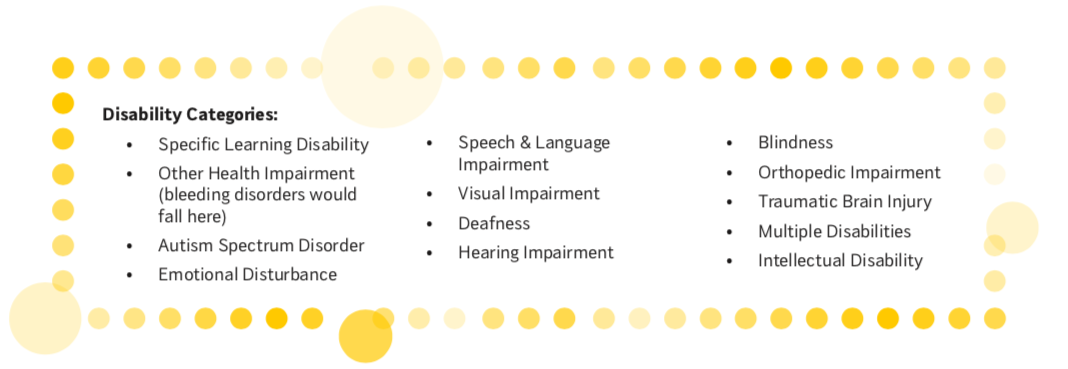
The purpose of a 504 plan is to provide access or remove barriers to participation. It provides students the same rights and services as their non-disabled peers. For students with bleeding disorders, a major life activity could include walking, writing, sitting or standing. Under a 504 plan a student can access related services as determined by the Team. These include the following:

Speech & Language Therapy:

  • Occupational Therapy

  • Physical Therapy

  • Counseling

  • Rehabilitative Counseling

  • School health services

  • Transportation

Reasonable Accommodations under a 504 plan:

  • Schedule of Physical Education activities

  • Extra set of books at home

  • Extended travel time around building

  • Extended time for homework/make-up work

  • All medically related absences are excused with no loss of credit

  • Field trips to include a nurse

  • Permanent pass to the school nurse

  • Medications, needles and supplies maintained in the nurse’s office

  • Staff in-service

  • Tutoring due to absences

  • Physical education credits for participating in outside physical therapy

  • Audio or video of class lectures

  • Regular email contact from teachers regarding missed assignments

  • Note takers/Copies of teacher notes

  • Homework posted on the school district internet (Class Dojo/Google Classroom)

  • Permanent pass for school elevator

  • Walkie-Talkies for recess

  • Medically-related absences excused with no loss of credit

  • Individualized Health Care Plan


What about after-school programming?

• Medications, needles and supplies maintained in the nurse’s office

• Staff in-service

• Tutoring due to absences

• Physical education credits for participating in outside physical therapy

• Audio or video of class lectures

• Regular email contact from teachers regarding missed assignments

• Note takers/Copies of teacher notes

• Homework posted on the school district internet (Class Dojo/Google Classroom)

• Permanent pass for school elevator

• Walkie-Talkies for recess

• Medically-related absences excused with no loss of credit

• Individualized Health Care Plan

Any program that is operated or funded by a school or contracted by a school is required for ensuring reasonable accommodations for children on a 504 or Individualized Health Plan. The school district, family and after-school program should work to ensure consistency between the school plan and what accommodations the student needs in the after- school setting.

Parents should plan on advocating for their child in the school system as bleeding disorders are rare and school staff may be unfamiliar with their needs or what accommodations will be needed. After reasonable requests for 504 eligibility, if a family has a complaint contact the Office for Civil Rights at:

https://www2.ed.gov/about/offices/list/ocr/qa-complaints.html

A Journey of Faith

Screen Shot 2020-08-27 at 2.03.48 PM.png

Published: Lifelines for Health Spring 2019

In November 2018, I had the opportunity to attend the ‘Mom’s Uninhibited Meeting (MUM) offered by CHES. It was by chance that I saw the social media post and figured I wouldn’t be able to attend with everything going on in my life, but thankfully, I did! I had no idea what to expect. My weekend started as I boarded the plane to Nashville. It was difficult being away from my family for the first time since my son had been born. Although, after the evening session that day, I immediately felt that I had made the right decision. The first night was special because it set the stage for the rest of the weekend. Even though I had never met any of these lovely women, it was easy to talk with them and share experiences since we all knew we had at least one thing in common. That night, I felt emotionally drained because the words that were shared struck a chord with me. The weight of my feelings was put into words that I could not or dared not articulate, or even think about, but benefited deeply from hearing them spoken.

My son was diagnosed with severe Hemophilia A in the early summer of 2018. About a month after that diagnosis, we found out he had developed inhibitors. To say we were overwhelmed is an understatement. The information that we had to take in seemed impossible to digest. Right when we thought we had a handle on it, something new would come up. Having the opportunity to learn and take things in that weekend opened my eyes to how much I still need to learn but also, more importantly, that my family has a choice when it comes to my son’s treatment and we can and should ask questions.

The educational sessions provided were eye opening. Since every mom had a different story and had been on their journey for different amounts of time, it was even more helpful. Each had different questions and stories that sparked questions for me and helped me learn even more than what was taught during the sessions. These things all changed my perspective on my son’s treatment. It has enabled me
to have a stronger voice when speaking with his doctors and it encouraged me to continue to champion for his best interest. Thanks to the help of Kathy Byrne, I was even able to stick my own vein! Having never been a fan of needles, it really was a milestone for me, and it encouraged me that someday I can learn to do the same for my son.

I think that every mom with a child who has an inhibitor should attend the MUM program. For the moms that are just beginning on this journey like I was, it was a great opportunity to learn, connect, and share. For moms that are further along in their journey, it was a great opportunity to guide and support those of us who are just getting started. I can’t thank Janet, and the CHES team enough for offering such a wonderful weekend. I am very grateful for the opportunity that I had to experience this MUM weekend.

Amy and her husband, Oscar have been married for 4 years and live in Orange County, CA with their 2-year-old son Hudson. She works at the Disneyland Resort as a Food and Beverage manager.

Momentum, Men's Inhibitor Retreat: Brotherhood

Screen Shot 2020-08-28 at 2.11.50 PM.png

Published: Lifelines for Health Spring 2019

Between managing my own health (including a daily ITT regimen), partially running a business, raising two small children who have recently been dually-diagnosed with bleeding disorders, cheer practice, dance practice, and being married to a spouse who also works, “overwhelmed” has become a word of persistency in my life.

Momentum (CHES’ men’s inhibitor retreat) was created to improve the quality of life for adults living with active inhibitors. As one of the creators of Momentum, I can humbly say that I benefit just as much as the average Joe. Or in this case, the average Bro. That’s what these meetings become to most of us. It’s not just a place of resources to better our lives, it’s also a brotherhood.

As Janet and I were prepping for Momentum last summer (along with the rest of the CHES team), she asked me if I was ready for this. “This” meaning acting as the lead facilitator of the program, as she (who usually takes on this responsibility for most CHES programs) would not be attending. After 10 years of doing this, I still feel the nerves of most people’s biggest fear - public speaking. But to Janet’s question, I replied, “absolutely, these are my people.” When I speak to this group, I’m not hosting guests or friends. I’m strengthening the bonds of my brothers as well as my own.

Some of these guys I’ve known for years, and some were new acquaintances for me, but we all have opened arms to each other. There are no judgements, no cliches’, no negativity, hatred, or disrespect - only brotherly love and acceptance. We feel we understand each other better than anyone else can. And although we may not see or speak with each other more than a few times a year, the connection picks right back up where it left off.

Serving my overwhelmed state was the opener to the weekend, which was both happily welcomed and received as Emily Taylor sat us all down in a circle for some mindfulness techniques and theory of pain exercises.

Although I don’t recall the specific methods of the session, I do remember leaving in a calm, relaxed state.

As someone who has just surpassed their 11th anniversary of ITT, vein preservation is a big concern. Like almost everyone else in this group, I can jokingly say I could be a phlebotomist tomorrow if I wanted to. But CHES’ acclaimed Kathy Byrne, who has decades of infusion experience under her belt, had tips that even I had not known of. Just changing to a 27 gauge needle has really proven to provide more mileage out of my veins. And marking a hard-to- find vein with a fingernail impression has bumped my “sticking average” up to nearly 100%. But I’m not going to reveal all of her secrets here, as I hope to see each and every (qualifying) person who reads this article at a CHES program.

Dr. Jonathan Bernstein of Connecticut Children’s Medical Center in Hartford gave us the updates on the latest and greatest products for inhibitor folks, as well as some that we either overlooked or had forgotten. After all, some products may not be new and shiny, but that doesn’t mean doctors and researchers aren’t reinventing treatment methods around them. Personally, the variety of products and the multitude of concerns and unanswered questions surrounding them are yet another overwhelming factor in my life, so I have chosen the wait-and-see method while maintaining ITT.

To close the programs off, we hopped in the pool as Chad Brown, ex pro-am wake boarder with hemophilia A and professional coach as president/CEO of the Wingmen Foundation, gave us some lessons on low-impact, water aerobics in a playful yet beneficial manner.

I look forward to reconnecting with all of our community friends and family each year at our programs, but Momentum is really something extra special to me. As I said, “my people”.

SAFE ACCESS to CANNABIS A Desire for the Masses, Necessity for Some

By: Mark Zatyrka

Published: Lifelines for Health Spring 2019

It is reported that over 100 million US adults deal with chronic pain. Statistically 1 out of every two patients report pain as being the cause for inquiry with a medical professional (Zou & Kumar, 2018). With the cost of the prescribed pain medications being above a half a trillion dollars annually, many go into medical bankruptcy trying to find a reasonable quality of life. Most are willing to embrace a naturally occurring compound because it can be digested by the body and mind without severe negative side effects, contrary to over the counter drugs and prescriptions which come with an array of side effects and often result in patients needing to take additional medication (sometimes 3-4) to alleviate side effects caused by the first medication. The stream of medications at times can seem endless for those in chronic pain management situations and those with debilitating health issues.

The medical community has discovered that several components of the cannabis plant offer daily relief from pain, nausea, sleep issues, seizures, depression and anxiety. The component that is most widely recognized and utilized currently is known as Cannabidiol, or more commonly “CBD”. CBD is the crucial component within certain cannabis strains, aiding in the relief from a plethora of potential health issues. It is the non-psychoactive compound that offers a wide array of medicinal benefits without resulting in the feeling which is commonly referred to as being ‘high’. This feeling of being high is a result of the other well-known component of cannabis, THC (Kubala, 2018).

Endocannabinoid System

Similar to hemophilia, the endocannabinoid system is rarely discussed in medical schools, however, we are learning it can play an important role in our overall health. Each person is born with an endocannabinoid system which helps regulate different physiological and cognitive processes from fertility to the sensations of pain. This internal processing system in each one of us is the primary reason we as humans can utilize cannabis for a wide range of effects that it can present when used in various ways. Our endocannabinoid system is essentially the system which allows for and develops communication between our cells. The CB1R and the endocannabinoid system are largely involved in various aspects of central neural activities and disorders, including appetite, learning and memory, anxiety, depression, schizophrenia, stroke, multiple sclerosis, neurodegeneration, epilepsy, and addiction (Zou & Kumar, 2018).

Your body can naturally receive and process all parts of the cannabis plant without harm or side effects to your body when it is used properly and efficiently. Cannabinoids resemble endocannabinoids and can essentially be absorbed and recognized by your body as though they were internally produced. Cannabinoids bind to receptor sites in your brain and body that allow for the different effects, which are varying by the cannabis strain, to take place. Within your body, what are known as your CB1 and CB2 receptors are largely involved in various aspects of central neural activities and disorders, including appetite, learning and memory, anxiety, depression, multiple sclerosis, neurodegeneration, epilepsy, and even addiction (Mary’s Medicinal’s, 2018).

Screen Shot 2020-08-28 at 2.54.50 PM.png

Previously, cannabis wouldn’t even enter the conversation until young adulthood, but now more than ever parents are looking to cannabis to solve the severe issues that their child may be dealing with. We are on the precipice of understanding the benefits of cannabis with children, therefore long-term scientific data is not available at this point, yet there are many anecdotal and surface studies that have occurred to open the minds of many.

Family Focus

A renowned case of success in the use of cannabis with children is that of Charlotte Figi and her family. Charlotte was age 2 when she had her first seizure. Her family physicians were absolutely convinced it was a onetime occurrence, but this became a prevalent issue in all of their lives. Ultimately, she was diagnosed with
a rare form of epilepsy called Dravet Syndrome. This is a type of epilepsy that typically does not respond to normal forms of medication or therapy. Her family felt helpless as their baby seemed to be slipping away and they worried about her ongoing development. As they went down every road that western medicine had to offer, they eventually had to accept that it was time to consider an alternative. This is when Charlotte’s family began the conversation with their physician about the use of CBD oil. They had heard anecdotal reports of cannabis helping with the frequency of Grand Mal seizures in adults and were curious if their daughter could benefit from such a regimen as well.

Although no doctor wanted to risk their license on approving the use of CBD oil for Charlotte due to her age, the family did not give up. Eventually they found Dr. Margaret Gedde, who approved the use of ‘pure CBD oil’ for her seizures. The next step was a long process, but they were able to find the Stanley brothers who had been growing medical marijuana for quite some time and were already heavily focused on isolating the genetics that were best suited for cultivating one specific component, CBD. They were able to go through and identify the specific traits within the strain, that they would eventually name Charlotte’s Web, to ensure less than 0.3% THC would be present within each yield along with very high levels of CBD. The Stanley brothers’ pride in themselves on providing access to safe cannabis is their life long goal, which they are achieving daily. From the cannabis grown by the Stanley brothers they were able to create a high end and very potent CBD focused oil extracted from the plant itself. Charlotte went from dealing with 300+ Grand Mal seizures per week to less than 1 per week with the use of the CBD oil produced for her. This case is the cornerstone of how the cannabis industry and CBD industry took the momentum they had gained via countless decades of initiatives and used it to launch the next phase in the cannabis movement (tiffany@ sweethoneybeehealth.com, 2018).

What the Figi family was able to achieve, by finding a responsible vendor and a medical professional who was willing to provide access to high- end medicinal cannabis, may easily be identified as a historical turning point for the cannabis industry. As a result of coverage of Charlotte’s story by numerous media outlets including CNN, acceptance and excitement around the potential surrounding CBD rose overnight; over the past 5-6 years, families have become increasingly willing to move across the country in order to gain legal and safe access to this plant- based medication. Hundreds of families have made this journey, uprooting their family from their home state in order to pursue accessible legalized marijuana, forgoing any federal laws in the pursuit of this medical alternative.

Colorado has become the ‘end all, be all’ for parents in pursuit of medicinal marijuana as a treatment for their children. “Hundreds of families have moved to Colorado in hopes of healing their sick children — kids conventional medicine has failed” (Ingold, Amon, & Pierce, 2014). While some are met with helping hands and success stories erupt, others are met with a harsher reality that they are too late for CBD to help, or they lack accessibility to help in administering cannabis treatments and creating proper regimens for proper dosing, so they are left to their own devices and must administer the medication to their children in their own home without proper guidance.

Overall, the amount of research and information regarding children and medicinal use of cannabis is quite minimal, therefore we must rely on current research to continue to decipher the reality of cannabis within the medical community. This has done little to hinder the hundreds of registered medical marijuana patients under the age of 18, brought by their parents to Colorado: In 2014 there were 400+ registered patients under the age of 18, many of whom were not residents of the state until after seeing the CNN report on Charlotte Figi and her progress (https://www. colorado.gov/, 2017).

Mark and Maria Botker from Minnesota were willing to separate their own family to find help for Greta, their 7-year-old child. While Maria traveled to Colorado with Greta seeking medical help, Mark remained behind at their farmhouse in Minnesota with their two older daughters (10, 13). In search of any help in mitigating the number of seizures their daughter was incurring daily, the family had gone through multiple rounds of pharmaceutical regiments and went as far as allowing brain surgery to be performed on Greta, but nothing helped. They came to a final resolution that their next step was to investigate cannabis and the potential for CBD (Bello, 2014). After only a few months of living in Colorado they realized their neighbors, Anna and Biagio Burriesci, were dealing with a very similar situation. The Burriesci family moved to Colorado from New York seeking the benefits of medical marijuana for their young daughter Grace. In doing so, they lost their jobs and their financial security, taking over a $200,000 loss on their estate in Queens, New York in order to pursue accessible and legalized medical cannabis. “This condition ultimately meant death for our kid, so we were going to war for her,” “Families are desperate,” Biagio stated. Their daughter went from experiencing 300 seizures a day to less than 5 daily and, thanks to the reduction in her episodes, she was able to learn useful motor skills to aid in coping through these episodes (Bello, 2014).

Breakthrough within the Cannabis Community

In June of 2018 the FDA approved the use of concentrated CBD, called Epidiolex, to treat rare forms of epilepsy. This non-synthetic cannabis-derived product is the first plant- derived cannabinoid pharmaceutical ever approved by the FDA. The company that created it, known as Greenwich Biosciences, has been at the helm of outstanding research, creating an avenue for specific cannabis products to become mainstream. Epidiolex has been available since November 2018, with sales in the first 2 months rising over a staggering $4.5 million dollars, and over 500 physicians prescribing this medication, the demand and support for this medication is apparent.

As we continue to advance with research and development, we are also gaining approval by the government, setting the stage for the future of other cannabis products and overall legalization (Partnership, 2018). Only 3 months after the release of Epidiolex, the U.S. Drug Enforcement Administration removed certain forms of CBD products from the Schedule 1 class and reclassified the cannabis-derived products as Schedule 5. This decision is the first official admission by the government that cannabis has medicinal value. Anything that is on the approved list of items and tests under 0.1% of THC is federally approved for sale and use with a prescription. CBD products derived from cannabis will be available for the masses in our lifetime, guaranteed, but it is not over yet as we all need to help and continue to move the needle in the right direction for overall progression (Hemp Industry Daily, 2018).

On March 12, 2019 a legislative bill, initiated by a Wichita couple with special needs children, will be moving forward in Topeka. “House Bill 2244 was introduced into the Kansas legislature to allow people with life-threatening medical conditions to get treatment with CBD oil with a small amount of THC.” In its title, the bill “authorizes the use of cannabidiol treatment preparation to treat certain medical conditions.” Both daughters of Gwen and Scott Hartley were born with microcephaly, a birth defect that causes the head to be under-developed and therefore smaller. Claire recently passed at the age of 17, and her parents have dedicated their lives to helping their 12-year-old live a full life. Titled “Claire and Lola’s law”, their parents hope to help other families seeking advice on, help with, and most importantly access to, CBD oil. The reality of this law change could be ground breaking, as Claire and Lola’s mother Gwen explained: The law is actually an affirmative defense law which would allow us to go to a legal state, purchase the THC CBD oil that would benefit our child, bring it back into Kansas and not get arrested or lose custody of my child,” Gwen explained last week. If this was approved this could be the light at the end of the tunnel for numerous families and a signal to other states to lift the ban on CBD use for severely debilitating disorders and life-threatening illness (Viviani & Kwch, 2019).

Many adults wonder: Is cannabis safe? Why would cannabis be the best option? Will it help? If I were to choose this route will my personality or decision-making change, or be altered in some way? Is it safe enough for my child? Is it proven to help my/my child’s disorder or level of pain? These are all valid questions when first entering the world of cannabis. I am always excited to share with others that it is proven through scientific studies over decades of research, that our own individual endocannabinoid system is intended to receive and utilize all types of cannabinoids.

Screen Shot 2020-08-28 at 3.04.02 PM.png

With legalization and decriminalization on the rise, we are finally moving the needle in the right direction for cannabis patients and users across the United States. 33 states have approved medical access for patients and 10 states have approved recreational access for patrons. The level of progress at the state level gives momentum and hope for legalization at the federal level, making this an approved substance across the country and allowing for safe access for the masses (NCSL, 2018).

Screen Shot 2020-08-28 at 3.06.26 PM.png

It can bring a grown man to his knees to see his only child in danger or worse to see them facing death at a young age. Those that are dealing with the consistent thought and therefore mindset of losing a child to a type of disorder or disease that can be treated in the same country that you are a citizen within seems unjustifiable. Many of us seek a quality of life balance as we get older and realize what is important to us. What if you were never given the chance to feel love, to speak to your parents, to feed yourself your favorite meal or play a board game during a family gathering? Many of us in the bleeding disorders community know how it feels as a parent of a child that could not enjoy their young life. Please ask yourself some hard questions and try to put yourself in another’s shoes to try and feel the level of utter dismay and confusion that they feel day in and day out. The way we resolve this issue is to keep this subject on the forefront of discussions until all laws are altered or changed in a way to allow for safe and responsible access to cannabis and all products derived from this plant. It can change the world if given the chance.

References:

Bello, M. (2014, February 18). Parents move to Colorado for ‘miracle’ pot for children. Retrieved March 8, 2019, fromhttps://www.usatoday.com/story/news/nation/2014/02/17/ moving-medical-marijuana-epilepsy-children/5255323/

G. (2019). MS Spasticity. Retrieved March 8, 2019, from

https://www.gwpharm.com/healthcare-professionals/ sativex/patient-information

Hemp Industry Daily. (2018, September 27). DEA moves CBD medicines off Schedule 1, reclassifying as Schedule 5. Retrieved March 8, 2019, from https://mjbizdaily.com/dea- moves-cbd-medicines-off-schedule-1-a-limited-expansion- of-cannabis-access/

Hill, K. P., Palastro, M. D., Johnson, B., & Ditre, J. W. (2017). Cannabis and Pain: A Clinical Review. Cannabis and Cannabinoid Research, 2(1), 96-104. doi:10.1089/ can.2017.0017

Ingold, J., Amon, J., & Pierce, L. (2014). CBD in Colorado: Seeking a marijuana miracle. Retrieved March 8, 2019, fromhttp://extras.denverpost.com/stateofhope/

Kubala, J. (2018, February 26). 7 Benefits and Uses of CBD Oil (Plus Side Effects). Retrieved March 1, 2019, from https:// www.healthline.com/nutrition/cbd-oil-benefits

Colorado.gov. (2017, August). Medical Marijuana Registry Program Statistics [PDF]. State of Colorado.

G. (2019, February 26). GW Pharmaceuticals plc Reports Financial Results and Operational Progress for the Quarter Ended December 31, 2018. Retrieved March 8, 2019, from http://ir.gwpharm.com/news-releases/news-release-details/ gw-pharmaceuticals-plc-reports-financial-results-and- operational

Mary’s Medicinals. (Ed.). (2018). SCIENCE OF CANNABINOIDS. Retrieved March 1, 2019, from https:// marysmedicinals.com/science/

NCSL. (Ed.). (2018, December 14). MARIJUANA OVERVIEW. Retrieved March 03, 2019, from http://www.ncsl.org/ research/civil-and-criminal-justice/marijuana-overview.aspx

Partnership. (2018, October 03). What Parents Should Know About Kids Using CBD. Retrieved March 8, 2019, from https://drugfree.org/parent-blog/what-parents-should- know-about-kids-using-cbd/

Sam. (2019). Home. Retrieved March 8, 2019, from https:// www.theroc.us/

Tiffany@sweethoneybeehealth.com. (2018, August 3). CBD, Charlotte Figi and Fighting for Life. Retrieved March 8, 2019, from http://sweethoneybeehealth.com/cbd/2018/08/03/ cbd-charlotte-figi-and-fighting-for-life/

Viviani, N., & Kwch. (2019, February 28). Bill allowing THC CBD oil for medical treatment moves forward in Topeka. Retrieved March 8, 2019, from https://www.wibw.com/ content/news/Bill-allowing-THC-CBD-oil-for-medical- treatment-moves-forward-in-Topeka-506519011.html

Zou, S., & Kumar, U. (2018). Cannabinoid Receptors and the Endocannabinoid System: Signaling and Function in the Central Nervous System. International Journal of Molecular Sciences, 19(3), 833. doi:10.3390/ijms19030833