Engaging Uncertainty

Published: Lifelines for Health Spring 2017

by Krystyn Strother

“The quest for certainty blocks the search for meaning. Uncertainty is the very condition to impel man to unfold his powers.” - Erich Fromm

As uncomfortable as it may feel, uncertainty is at the foundation of our lives. We want to know, always, especially when it comes to our loved ones and our future. These unknown prospects can leave us feeling unsettled. Yet, the reality that every living being on this earth faces is one of uncertainty. Our jobs are not guaranteed, our cars will inevitably need fixing, and the sun shines even when rain is in the forecast. When we cling to an expectation of a certain outcome, we set ourselves up to suffer even more if it doesn’t happen.

Uncertainty is so upsetting, causing stress and anxiety, that many of us try to avoid or control it altogether. Often, people will say that we need to cope with these feelings, but what does that really mean? How do we cope? Certainly, not by putting your head down and hoping for something different. Moving through moments of uncertainty requires engaging with it and this is where a mindfulness practice can be helpful, if not essential.

Mindfulness teaches us to disassemble reactionary thoughts into manageable parts and pieces. It gives us a buffer between event and reaction so that we can form a productive response. Rather than focusing on the negativity, we learn to pay attention to our experience with curiosity and without judgement. This is engagement. A sitting back in your seat when those uncomfortable feelings come up and extending a chair and invitation for them to sit down right across from you.

Mindfulness

The subtle art of positive, internal manipulation. There are things that you can and cannot control. For example, you cannot know what the outcome will be regarding our nation’s current healthcare debate. You can, however, take note of what you are able to control when you experience any negative or stressful thinking around this topic. You can, for the most part, control your environment. Are there ways, in these moments of stress and anxiety, that you can alter your environment to find a sense of grounding? Open a window, take a deep breath, turn on a light, or adjust your posture. When you’re thinking about a moment, you can control your response, which influences everyone around you. The problem with dwelling upon a moment that is out of your control is that you are too overwhelmed by your expectations or fears of the future that you lose sight of what is taking place in the present.

Be Confident

Engaging with your uncertainty will only give you more insight and a better understanding of what you are really feeling. A better understanding of what we are feeling and why, gives us more access to our experience, and while we can’t control everything, we can learn to ground ourselves in the moment. This helps us to feel better prepared to tackle whatever comes our way. The only constant in life is that it will involve change, and try as we may to control the future, sometimes all we can do is trust that whatever happens, we can adapt and make the best of it.

Uncertainty is inevitable. And no matter how hard we try, controlling it simply doesn’t work. Instead, practice acceptance, control what you can and relinquish the rest. Mindfulness, at its best, teaches us how to be open to both. Practicing mindfulness cultivates comfort with discomfort.

Screen Shot 2020-08-03 at 3.40.52 PM.png

Krystyn Strother is the former program director at HUSH Meditation, strategic designer/author of the HUSH meditation curriculum, is a certifiedmeditation instructor, co-founder of NOMAD, “Adventures in Wellness”, and yoga instructor.

Krystyn’s yoga classes range from Vinyasa to Yin. In addition to her regularly scheduled classes, Krystyn guest teaches at several yoga teacher training programs throughout the country, speaks at conferences on mindfulness and stress reduction practices, teaches specialized workshops, facilitates yoga + adventure retreats, and conducts continuing education classes for currently registered RYTs.

Krystyn holds a certificate of completion in the Yoga of Awareness For Chronic Pain, an evidence- based program sponsored by the Department of Anesthesiology at OHSU.

Read more about Krystyn at krystynstrother.com

"HOME" Coming

by: Crystal James

Published: Lifelines for Health Fall 2018

Inhibitor Family Camp to my family and I means love and acceptance. We live in a world that’s harsh and sometimes rather distant to the reality of what hemophilia is. Camp is a place where we as parents can watch our children be carefree and the children themselves can build relationships amongst their peers and build confidence within themselves.

Families are able to see within what can be missing as a whole when we step out of our normal environments. We get a chance to escape the everyday routine of life and let the enjoyment of being a structured family unit flourish as one.

I feel as though IFC gives my boys a sense of self confidence. They get a chance to meet peers
older than them such as camp assistants and counselors that also have the same disorder that they battle every day. Meeting these older peers with the same challenges, gives them a sense
of self-fulfillment. It provides the boys’ positive reinforcement that growing up with hemophilia is okay and they can do anything in this world that they want.

I also think Inhibitor Family Camp is a place where you can feel relieved within the hemophilia community. All of us as families were brought to this amazing place for the same reason. As crazy as life can be dealing with the horrors of this disorder every day, day in and day out, camp seems to be a place where these horrors don’t exist. All of the attending families are comfortable with one another. These children from all different walks of life join together as one and we become one big happy family for a whole entire weekend.

Camp is also a place where we learn how to deal with the mental aspects of living with a child that has hemophilia with an inhibitor. I find it amazing that we get the chance to challenge our intellect and obtain knowledge on how to deal with the harsh reality of what hemophilia can do to your family members and the siblings living with it as well. We need that aspect of teaching for us as parents because it can be tough having to deal with this disorder and having other children.

For me, altogether Inhibitor Family Camp means - we grow substantially as a family. We gain confidence as well as independence. We gain memories and friends for a lifetime. We look forward to the year passing so that we can make these memories grow with many more. If I truly had to sum up camp to one word, I would say camp is like home because (in my eyes) home is where the heart is, and Inhibitor Family Camp is full of just that. Love for a lifetime. I will always love for my family to be a part of this experience. Thank you.

Leverage 2018 Walking the Wire

by Gabriel Anspaugh

Published: Lifelines for Health Fall 2018

I was diagnosed with inhibitors when I was 15 years old. Up until that point I lived my life pretty normally. Yes, I had hemophilia, but I wasn’t going to let it get in the way of how I lived my life. However, the first little bit of time with inhibitors was quite tough on my mental state. What could I do, and what couldn’t I do? And could I even get back to where I was? As time went on, I again discovered what I could do and what would be more difficult for me.

Back in February, I was on a slackline at a rock-climbing gym. (I know, a hemophiliac with an inhibitor at a rock-climbing gym - sounds like the beginning of a bad joke, right?) Moving on, a slackline is essentially a tightrope that has a lot of slack, so it’s more wobbly. I was determined to prove that I could do this. I ended up rolling my ankle pretty severely. This injury put me in the hospital for a week and in a wheelchair for many more. As I was going through this, it was pretty hard for me to look at the positive side of this situation since there really wasn’t one when losing the ability to walk.

However, there was an upside to this accident. Eight months later, this life lesson came full circle when I attended an educational, adventure, camp program for individuals with inhibitors called Leverage in Oregon. As I was at Leverage, one activity we did was a high ropes course. The amazing instructors had suggested to us that we each find a specific goal to accomplish. I wanted to complete every element of that course.

My first instinct was to go straight for the most difficult ones to complete. In my nature of being a very physically, active person, these tasks were fairly easy for me. But I knew that the last element was going to be a challenge. It was a slackline with ropes hanging

at separate points to hold onto. My experience with a slackline from less than a year prior was the most difficult for me to accomplish. It’s funny how such an easy obstacle to complete was the most difficult for me to overcome. That horrible fall, the time spent in the hospital, and that debilitating wheelchair were all running through my mind throughout the entire experience. I watched all of my blood brothers (who I had grown to know and love) go through this obstacle with

no problem and just keep going. However, when I stepped out and was about a quarter of the way through this element, I actually had to stop, take a knee, breath, and wrap my mind around everything. I knew I couldn’t fall because I had a safety line. And I knew that the likelihood of injury was low. But why was this so hard for me? Once I caught my breath enough to keep going, I just had to keep my eyes on the trees ahead and try not to focus on the memories of what was the worst injury of my life. Once I got to the next platform, I had to fight off tears as I realized that I just conquered something that had crippled me for a better part of the year.

So, what was one of the biggest things that I took away from Leverage 2018? ...the memory of conquering something that was once so disabling to me.

FEATURE: Understanding Complex PTSD Trauma

Published: Lifelines for Health Fall 2018

By: Charlie P. Gilbert II, LCSW

“The” Inhibitor Traumas

Do you remember yours? That first time that it really hit you that your child had a life-threatening inhibitor. Maybe it was when the Doctor or Nurse told you in the HTC clinic that the “normal” treatments to stop the bleeding weren’t working and that it was clear that your child’s body was rejecting the known factor solutions. Or it could have been when you nervously waited in the chaotic Emergency Room with dozens of other parents while a Doctor somewhere behind a curtain in another room tried to figure out what to do with your child who couldn’t stop bleeding, swelling and crying. And then there was the time that you with others had to hold down your child, kicking and screaming, to infuse or draw labs. The abject powerlessness of a parent to protect or save their child is painful in itself. You probably recall the de-personalization that you felt when it seemed as though you were outside

for that unsuspecting moment when they trigger the anger, panic, powerlessness, fear or hurt that comes from your exposures to the earlier threat to your child’s existence and your impotent role as a parent. It might be on another visit to the hospital years later when someone minimizes the effects of a bleed. Or it could be when the school assumed that your child couldn’t participate in the class musical or other event.

The Brain’s Response

So what will it take to recognize the lasting effect these events have had on your mind? We know that the most traumatic events and stressors lead to a cascade of neuroendocrine responses in the body. These changes alert and prepare us to take on the stresses and challenges we’re facing. But, if constantly repeated, they also lead to permanent changes in our brain structure in which we develop high arousal levels leading to anxiety, fear, hyper- vigilance, avoidance, and compulsive, intrusive thoughts and memories. Some clinicians will find these symptoms giving rise to a diagnosis of depression or PTSD. In Depression they observe a loss of hope and the inability to find enjoyment. Acute Inhibitor care at a very young age can also result in traumatic exposures which isolate family members, change their roles and may produce an anxious attachment style in the child, leading to future difficulty forming interpersonal relationships.

In the case of PTSD, clinicians look for a traumatic event. Here however, we find in inhibitor care and treatment a series of small and repetitive traumas that over time coalesce into an ongoing chronic stressor leading to physical, developmental and interpersonal negative outcomes. These include avoidance of medical care and treatment or withdrawal or hypersensitivity to other threats in the environment.

We know, from the research of the ACEs (Adverse Childhood Experiences) events in children’s lives, that abuse, neglect and other severe trauma, experienced or witnessed predicts very negative outcomes later in adult life. In this study of the early lives of more than 17,000 adults, the CDC and Kaiser Permanente Health Appraisal Clinic found that ten forms of childhood trauma were associated with negative psychological and physical outcomes. Unfortunately, the forms of trauma most studied failed to capture the inevitable and repeated traumatization of children and their families by medical and surgical procedures. In response to this oversight, professional bodies have begun to look at new terminology to describe this problem. Complex trauma and Complex PTSD are two of the newer terms created to recognize the various symptoms of this developmental trauma.

The changes that occur in the brain following these occurrences become permanent and represent considerable risk to health and life for parents and children going forward. Parenting also affects children’s’ brain development in lasting ways. As children grow with the ever-present threat of severe physical outcomes of a momentary lapse in judgement, they take their cues from the coping practices of their parents. In effect, they surrender their own coping choices to the dominant style of their parents’ management of the stressors that develop out of the child’s inhibitor.

This is also quite evident in our other children, the siblings of the affected child, when they witness the overpowering acuity of inhibitor related activity. Priorities shift, plans are given up, goals are set aside, events cancelled, hours are spent in clinical offices or emergency rooms. Needed attention shifts from the unaffected siblings to your child with the inhibitor. The brothers and sisters get to see their significant adults at their most stressed and find in that experience meaning about their own role in the family. At the same time the older and younger sibs are required to take on adult responsibilities and more mature coping responses. Their childhood can fade away into a “parentified” identity with accompanying expectations from
other family members. The siblings help with the caregiving, sacrifice their own events and happiness, and can become surrogate adults in the home. Of course, it’s quite possible that they will reject the role entirely and become the focus of resistance to the family process. Their acting out can send a powerful message about their complaints. The stressors experienced by siblings, while lacking a diagnostic terminology, lead to many of the same symptoms and developmental impediments found in PTSD. More than a few siblings of children with inhibitors have shared that in crisis they become “invisible.” Some even hide there.

Overcoming the Trauma

So what, if anything can we do about this? How can we help our traumatized children, siblings, partners, and ourselves to avoid the negative outcomes of the repeated traumatizing exposures? There are certainly a great many approaches to reduce, mitigate and overcome the symptoms and risks of the trauma. In the summer issue of Lifelines for Health Dr. Gary McClain told us about the effects of repeated traumatic exposures on the individual with an inhibitor and on his caregivers as well. He encouraged us to improve our coping, manage our anxiety, remain calm and get support.

I’d like to add several important ideas that could help us to address the symptoms and improve outcomes for our affected children, siblings, partners and for ourselves. The following approaches are designed to be useful for anyone experiencing the effects of repeated and chronic traumatic exposures and needing to overcome adversity. Some of these you may find are helpful while others don’t make sense to you at this time. Some of you may have tried and found them not helpful. Others you might see as difficult or moving you out of your normal responses. I would ask you not to discard them as they may be more effective at another time or with another member of the family. Here are “Charlie’s Challenges.”

First let’s remember the lesson of why we have families. A family is the laboratory for the biopsychosocial development of its members. Each person in our family is on a trajectory of development towards happiness, satisfaction, cognitive/ intellectual development, interpersonal effectiveness and meaning in life. We can get there and help our family members to get there by understanding and supporting each other. There are some rules for accomplishing this. One is that we need to understand the meaning of events, emotions, and behavior not just in ourselves and family members but in others around us. This requires us to set aside our emotions for a moment and consider the significance of what is happening, what we and our family members are feeling. The poet, Maya Angelou told us that people don’t really remember what we said or did but “...how we made them feel.” If we lose our “cool,” we become reactive and not reflective. Aside from saying things that serve to alienate others, we set a problematic example for our children and impede their acceptance and appropriate response to the stressors.

Our children are smart and they often know exactly how we’re feeling even if we didn’t verbalize it directly. But they more frequently act out their feelings rather than articulate them. We must help them to find the words and sometimes we give them the words by recognizing and validating their feelings. They often need help to really see and understand what is going on around them, especially in threatening environments such as schools, emergency rooms and clinics. To understand their risk, they will take their cue from their parents and other adults behavior. If they’ve got an angry, upset or fearful parent they will adapt quickly to fight, flight or freeze. Their arousal level will peak with uncertainty about what to do next. In that setting they may mistake or over exaggerate the threat that exists and they won’t be able to see any positive benefits of treatment and compliance. They won’t recognize or adopt the process of reflection and choosing the best approach. So, we must protect them from our negative emotions and model the self-regulation that will instill confidence and serve them well in this and future crises.

But reflection serves us as well. An important aspect of coping with stress is recognizing and accepting events and their meaning to us. As we learn to identify our triggers we can adopt an improved “reflective functioning,” that simultaneously engages our emotional and cognitive brain structures. Rather than respond immediately to each insult and stressor that appears in our environment we need to step back and ask ourselves, “What is this?” and “Do I own this?” This will help us to modify our perception of the problem and reduce its power. If we can adopt this approach we can avoid the outlay of emotional energy on the past and move on to a more productive approach of understanding and coping with the stressors. These changes can re-train the brain to be less responsive to triggers and reduce our need to be overly vigilant.

Some parents have pursued other behavioral and cognitive approaches that have proven helpful in defusing their emotional outbursts. Quite a few people have discovered that they need a “time out” in response to re-experiencing the thoughts and emotions from the original trauma. They are inclined to focus on a breathing exercise to clear their mind and control their physiological response. Others may go directly to meditation and find that doing so routinely, before entering a stressful venue, helps to reduce their anxiety.

The old cliché of “living in the moment” rather than the “painful past” gives us a chance to think clearly and positively. Sometimes we’ll find that we “own” only a part of the stressor and that a painful part belongs to some other person or is part of a different problem. Yes, we certainly learn from the past, but if our
negative emotions focus only on the past, they cloud our vision of what will make a significant change in coping with the issue. At other times we may find that we need to take responsibility for our actions
and emotions and this requires making amends to our loved ones. The act of offering apology and asking for forgiveness can lift a burden from ourselves and from our partners and children.

Moving towards a more effective outcome, we know that decision- making is improved by positive thinking. Problem solving is enhanced and positive affect reduces psychological distress and alters neuroendocrine, inflammatory, and cardiovascular activity. It leads to experiencing less pain and improved social relations. Other research points to positive affect reducing the likelihood of adolescent substance abuse and risky behaviors. Helping our loved ones to find the positive in a difficult situation can make a big difference in their feeling of security and hope for a better future.

Another critical aspect of ownership is that as parents, we can’t take ownership of health problems and behavior from our children.

Screen Shot 2020-08-03 at 3.57.13 PM.png

It can be awfully hard for parents to not take complete responsibility for our children’s health and treatment issues but doing so takes away the motivation to be effective managers of their own lives. It deprives them of the feelings of competence and confidence in directing their own position in the family and in the world in general. Yes, we love and want to spare them all the mistakes in judgement, but they find out who they are by participating in the process. As Billy Joel reminds us about mistakes, “...they’re the only things that you can truly call your own.” One of the hardest parts of parenting is supporting our children even when they chose poorly and against our best advice.

Helping our children overcome the trauma experience is often foremost on parents’ minds. One mindful approach for parents to adopt that has proven effective is PACE. Developed most recently by Dan Hughes and Jonathan Baylin, it incorporates Playfulness, Acceptance, Curiosity, and Empathy. When discussion of the event or stressor is experienced by children in a less- serious or lighthearted manner they feel less threatened and the de- escalation allows for more objectivity. Acceptance is a means by which judgement is set aside and parent and child can work together to understand the problem and adapt a response.

Curiosity serves to facilitate a pattern of discovery and understanding of the stressor and encourages the child to explore and make meaning of their own inner lives. Finally, a consistent empathic approach to our stressed-out children helps to reduce defensive posturing and enables children to feel visible and valued.

Another benefit of letting go of the painful past is that we can avoid re-enactment of the trauma or re-traumatizing members of the family. If we visit that crisis every time we or they are triggered by some offense or challenge, the original insult is re-enforced and brought to foreground of our emotional coping responses. This tears away at our resilience and blocks our adaptation to effective management of the issue. The same is true for our children, as they relive all the emotional baggage and hurt that originally caused them pain. Rather, we try to avoid the baggage of over analyzing, blaming, and fixing that we are inclined to do to protect our loved ones from their pain and their development of an emotional boundary against it. As we and our children battle with the challenges of life we develop a pattern of coping with stressors that leads to a mature repertoire of adaptive mechanisms that will carry us towards that success that we want and need. If we can remove that baggage from our relationships, we will be much more likely to develop the “challenge orientation” and independence that equips us with strength, determination and motivation to be successful.

One last look at our response to the trauma of the inhibitor experience, involves training ourselves to listen more carefully with empathy even when we are hearing painful and negative comments. We can easily get
caught up in the rolling catastrophe of an ER visit when a physician, nurse, or child welfare advocate want to second guess causation or a remedy for a problem we’ve been coping with on a daily basis. If we hear this often enough we respond emotionally and tend to stop listening and block the sometimes unspoken meaning of it. It might be coming from a sibling of our affected children in the form of a complaint about fairness or it could be a silent acceptance of their secondary status in the family. We have to remember that all feelings are real and listening for the meaning of comments rather than just the exact details of the spoken words will help us to keep on the path of open communication. When we develop a curiosity for the meaning behind other’s statements and behavior we can begin to truly understand their motivation and needs. We are in effect “PACEing” ourselves.

Our brain’s ability to adapt and develop new connections is referred to as plasticity and it continues throughout our lives. Those triggers and traumatic stress symptoms which have been created in our minds can be altered. If we take on the challenges to develop different responses to the stressors of having an inhibitor in the family, we can reduce the power of the symptoms and retrain our minds to overcome any adversity. Change is coming and if we get behind it in a positive way we’ll have more positive and resilient outcomes.

Screen Shot 2020-08-04 at 11.46.52 AM.png
Screen Shot 2020-08-04 at 11.47.13 AM.png

Anxious? How About Running Toward Your Anxiety?

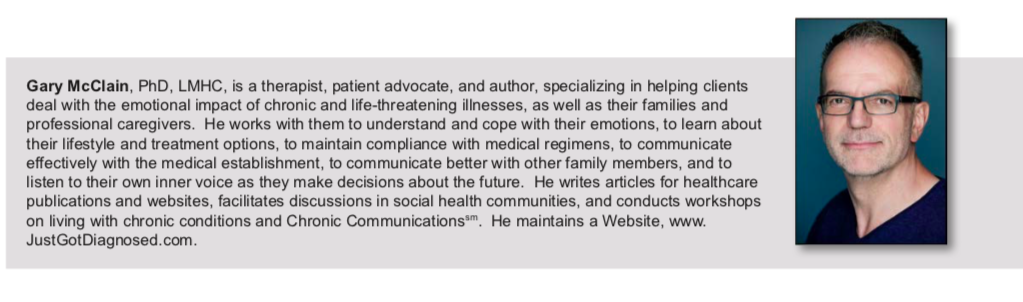
by Dr. Gary McClain, PhD

Published: Lifelines for Health Fall 2018

Living with a chronic condition gives you all kinds of reasons to feel anxious. Do I need to go through a list with you? Probably not. Humans don’t do well with uncertainty. And chronic conditions can bring all kinds of uncertainty to your life. Having to face a test or a procedure. Adjusting to changes in your daily life. Thinking about the future. And stress. All of this can lead to anxious feelings. So, what do you do about those anxious feelings? Suffer until they hopefully go away on their own? Try a technique and hope it works? You’ve got more options than that. Coping with anxiety begins with how you think about anxious feelings as well as preparing yourself for the anxiety that might come your way.

Here’s how to get started: Accept that anxiety is part of life

When I was in training to be a therapist, one of my teachers said this at the beginning of a lecture on working with anxious clients: “You’re anxious. So what!” Look around you at the world news, your community, your family and friends. You could say that any given day brings lots of reasons for anyone to feel anxious. That doesn’t mean you have no choice but to be continuously overwhelmed with anxiety. Not at all. The point is that unless you’re comatose, you’re probably going to experience some anxious feeling from time to time, or often. It’s normal, and you’re not alone.

Lean in to your anxiety

Here’s a mindfulness exercise for you. Visualize yourself hiding in your house with all the doors and windows locked and anxiety standing outside on the porch, pounding on the door to get in. And then, imagine opening the door and saying: “Come on in, anxiety. Let’s sit down and talk.” If the anxiety is not going away on its own, you might as well see if the two of you can come to an understanding.

Look for the lesson

Is there something you can learn from those anxious feelings? In other words, could some of that anxiety be a message from your mind that it’s time to take better care of yourself or to make a change for the better in your life? Successful people often talk about how they use their anxiety to motivate themselves to work a little harder to be excellent. Clients living with chronic conditions often tell me that feeling a little bit anxious helps motivate them to stay compliant with their treatment and self-care routine. This isn’t to say that’s all that anxiety is good for you. But if there’s lesson there, then learning it might help you to reduce some of that anxiety.

Don’t get anxious about getting anxious

Nobody likes being anxious. But I often find with my clients is that they dislike anxiety so much and are so afraid of being overwhelmed by their anxious feelings, that when they feel anxiety coming on, or worry that they might get anxious later, they get anxious about the anxiety. They do this by worrying about how bad their anxiety might be. They create anxious stories about what might happen.

They get anxious about how they’re going to cope with the anxiety. And guess what? They end up creating more anxiety for themselves. Watch out for negative self-talk that helps to create more anxiety.

Talk to yourself

When anxious thoughts and feelings start building up in your mind, talk yourself off the ceiling. Remind yourself that it’s normal to be anxious sometimes. Ask yourself what you can do for yourself to reduce your anxious feelings. When your mind tosses those scary stories and images at you, talk back to them: “Bad things can happen but so can good things. I can’t predict the future.” When you stop fighting anxiety, you free yourself up to focus your energy on what you can do about it.

Calm yourself down

Think about what helps you when you’re feeling anxious. Imagining a relaxing place like the beach? Taking a walk? Listening to music? Reading a book? It might help to put a tool kit together with the calming techniques that work for you, and have them ready for when you feel anxious.

Be proactive

Take a look at recent days when you have felt less anxious to find clues for how to avoid anxiety. Was there something you did or didn’t do that day that might have helped you to have a more relaxed outlook? Were you compliant with medication? Following your diet? Staying active? In touch with supportive people? One of the best ways to cope with anxiety is to not set yourself up to feel that way by building anxiety prevention into each and every day. Again, apply the lessons that anxiety can teach you. As they say, an ounce of prevention is worth a pound of cure.

Talk to somebody

Get some perspective. Sit down with someone who can listen without judging you or telling you what to do. Talk about what’s making you feel anxious. Sometimes just saying it out loud can help you to see what’s real and what’s being manufactured by your imagination. Ask for some encouragement. And maybe some accountability if you want to make some changes for the better.

And reach out for help if you need it

If you are feeling overwhelmed by anxiety, if it is interfering with your ability to do what you need to do
to take care of yourself, if it is getting in the way of your relationships, or if it is making it hard for you to make decisions, then it may be time to reach out to a mental health professional. Talk to your doctor if you aren’t sure where to start. Don’t go through this alone.

Anxious feelings are part of being human. Lean in to your anxiety. Listen for the lesson anxiety can teach you. And take good care of yourself.

Keep Calm

Withdraw if you need to. Move yourself out of the center of the action. Physically, mentally, or both. Step back. You can even say something like, “I need a moment.”

Use your breathing. That initial emotional rush can be overwhelming. Notice how you’re breathing. Little short breaths? Not breathing at all? Take a series of deep, calming breaths. In through your nose, out through your mouth.

Do things that calm you down. Listen to music. Take a walk. Read. Do some relaxation exercises. Anything that helps you to stay calm, that helps you feel connected to your center. Calming yourself down is essential if you are experiencing symptoms of PTSD.

Don’t fight your feelings. Okay, so you’re having a lot of feelings. The worst way to cope with emotions is by pushing them down or trying to pretend they aren’t there. Your feelings are your feelings. Good feelings, feelings you aren’t so proud of. Give yourself permission to feel them all.

Remember that feelings may not represent reality. The feelings of the moment can make the world around you look pretty foggy. You may see things that aren’t real, like what someone else’s motives look like, or where a situation seems to be going. All the more reason to take a pause until the fog dissipates.

Try to be patient with yourself. Emotions are part of being human. Our way of coping with strong emotions is hard wired into us, based on years of practice. Some of us shut down, some of us wear our emotions on our sleeve. Learning how to cope with emotions in a healthier manner takes practice. And keep in mind, if you’re living with a chronic condition, you have that much more on your plate. So be patient with yourself.

Most of All, Stay Supported...

If you’re living with a bleeding disorder and an inhibitor, you already know the value of staying connected to your support network. If you are experiencing strong emotions, and especially if you suspect you are experiencing PTSD, it is important to get emotional support, professional support, family support, friends, and other members of the inhibitor community. The same if you are a caregiver. If you are a family member of someone you suspect may be experiencing PTSD, it’s important to get support for both your loved one and for yourself. Don’t go through this alone!

You, your chronic condition, and your mental health. You’re dealing with a lot. And one stressful situation followed by another can take a big toll on your mental health. If it’s all starting to wear you down, do the bravest thing in the world and ask for HELP. PTSD, like other mental health conditions, is treatable.

Screen Shot 2020-08-05 at 11.32.40 AM.png

Shining Light on School System Disagreements

by Lisa Cosseboom, M.Ed. & CAGS School Psychologist & Special Education Evaluation Team Chairperson

Published: Lifelines for Health Fall 2018

For this article, we asked our inhibitor families to share stories of challenges they faced with their local school systems. We thank you for sharing! We applaud your tireless efforts to access equals rights to a free appropriate public education for your child. It can be a frustrating landscape to navigate! Our school psychologist, Lisa Cosseboom shares some solutions for challenging situations.

  1. My child is in a wheelchair temporarily. Can the school suggest he or she stay home until the wheelchair is no longer needed? NO! You cannot exclude a child from school based upon a temporary disability or otherwise. If it were a permanent condition, the school district must provide wheelchair accessibility including transportation, handicap bathroom access, elevator, ramps etc. Additionally, the school must provide alternative/modified physical education during which the child is unable to participate fully.

  2. As part of an agreement with our public school, my child attends a private school at their expense as it met his needs better than the public system. We have been trying to get a 504 plan for him before he enters high school, but the school refuses to write one.

    Unfortunately, unless that private school is receiving federal funding in any capacity (i.e. Title 1 funding) they are not required to follow the Americans with Disabilities Act regulations. If he were entering a public high school, the school district would be required to hold a 504 eligibility meeting.

  3. My child is in a private school. What accommodation or services can be provided for my child there?
    Unless receiving any type of federal funding, the school is not required to provide accommodations and/or services. However, you can certainly request a meeting with administration to see if they would be willing to entertain providing accommodations as needed. Sometimes, approaching a school with a positive attitude and reasonable request will work. (I.e. you get more with sugar than spice.)

  4. My child sees the adjustment counselor at our school for anxiety issues related to his bleeding disorder. Can the school system charge me personally for those services?

    Absolutely NOT! Services provided in the public school system, by a public school employee are covered by your taxes! If your child is seeing someone outside of the public schools for counseling in school by an agency, then your insurance would cover the cost.

  5. The ADA coordinator at our elementary school invalidated my child’s 504, indicating that absences and injuries would be evaluated on a case by case basis to prevent abuse of services.
    This is a clear civil rights violation. Public schools are required to provide appropriate accommodations to a qualified student who has a disability so that child can participate and access their education. Any child who has a disability that “substantially limits one or more major life activities” which includes education. They cannot “invalidate” a 504 plan because of injury or absences. I would suggest you meet with the principal or higher administrator in the district. If possible, I would suggest you acquire an advocate.

  6. The school my daughter attends, put a 504 on hold for my daughter because she doesn’t go to the nurse when she has a bleed and can manage on her own. How can I get the school to put a 504 in place?
    Regardless of your daughter’s independence in caring for her bleeding disorder, she should have a plan in place. A meeting should be held for qualification and you will need to provide medical documentation. There could be times that your daughter may need to access the nurse without question from teachers or scrutiny.

The Future's So... BRIGHT

by Janet Brewer, M.Ed

Published: Lifelines for Health Fall 2018

The bleeding disorder community is currently experiencing one of the most rapid growth periods since the 1990’s when recombinant products hit the market. Corporate buyouts bring changing companies, some of whom are completely new players to the bleeding disorder community. New products that provide the convenience of subcutaneous administration are here, with more coming, gene therapy for FIX may be just around the corner, with FVIII not far behind. Women’s bleeding symptoms are finally being recognized. It is truly a dizzying pace and we do this for a living! With each of these advances however, the benefit-risk profile for any and all new products and treatments must be first and foremost in our minds.

So, what is going on?

Gene Therapy

A cure in our lifetime was the refrain when my brother was born in 1970. Multiple attempts at gene therapy have occurred in the last 4 decades, but it is clearly looking to become a treatment option in the next five years, especially for Hemophilia B. Companies such as Spark and BioMarin are on the leading edge.

No one is saying yet that hemophilia will be cured. Currently, gene therapy — which uses a virus to deliver a new gene to cells — can only be used once. If it stops working, the patients lose the benefits. For now, “we are anticipating that this is a once-in-a-lifetime treatment,” said Dr. Steven Pipe, director of the hemophilia and coagulation disorders program at the University of Michigan and a lead investigator of a clinical trial conducted by the biotech company BioMarin (https://www.nytimes. com/2018/08/13/health/hemophilia-gene- therapy.html)

Many questions exist however, regarding its long term-safety and efficacy. The FDA has
a draft document that’s currently open for comments, entitled Human Gene Therapy for Hemophilia at:

https://www.fda.gov/downloads/ BiologicsBloodVaccines/ GuidanceComplianceRegulatoryInformation/ Guidances/CellularandGeneTherapy/

The document covers considerations for product development, consideration for FVIII/FIX activity measurement assessed by different clinical laboratory assays, expedited programs, communication with the FDA, considerations for preclinical studies, and considerations for clinical trials to include:

  • Efficacy Endpoints

  • Study Population

  • Study Design

  • Study Monitoring

  • Statistical Considerations

  • Patient Experience

Increased patient monitoring efforts that are well- established and enforced with clear cut guidelines for what constitutes an adverse event with proper reporting procedures, should be part of the approval process. Our community has a well-documented history of what can go wrong when products that are considered “life changing” are introduced into our treatment regiments.

Hemlibra

For many in the inhibitor community, Hemlibra has proven to be a game-changer in care. There is no doubt it has decreased bleeding and consequently increased quality of life for inhibitor patients where nothing else has worked. The convenience of subcutaneous treatment after years of port therapy and complications has led to unprecedented recommendations for its use.

Genentech announced the release of Hemlibra to hemophilia A patients without an inhibitor on October 4, 2018. This comes less than a year after its approval on November 18, 2017 for the treatment of hemophilia A patients with an inhibitor.

During Dr. Stacy Croteau (Boston Children’s Hospital) and Dr. Lindsey George’s presentation, Update on New Therapies and Gene Therapy Trials in Hemophilia for physicians at NHF, October 18th-21st, 2018, they explained, emicizumab/Hemlibra is a hot topic. The HAVEN 3 noninhibitor patient study also shows that “emi” (emicizumab) is better than treating on demand. However, there were adverse events occurring in at least 5 percent of participants including injection site reaction, headache and diarrhea. Dr. Croteau also concludes that there is “significant laboratory monitoring challenges and (a) lack of understanding of effective hemostasis provided by emi alone and that more information is needed concerning those who have had major trauma or surgery.”

Dr. Glen Pierce concludes that, “questions remain; while it mimics FVIII in bringing FIX and X together, it doesn’t simulate other functions of FVIII.”

The American Thrombosis and Hemostasis Network (ATHN) announced the launch of ATHN7: Hemophilia Natural History Study Overview at NHF this October. The study’s intent is to follow a group of people over time to collect health information from patients to understand how bleeding and clotting disorders like hemophilia develop and to design effective treatments. According to Dr. Tyler Buckner, one of the lead researchers at Hemophilia and Thrombosis Center, University of Colorado, “ATHN 7 is looking to find out whether non-factor replacement products are safe when used as a preventative measure for patients who have inhibitors as well as for those who don’t. We’re also going to be evaluating the effectiveness of non-factor products*, bypassing agents, or coagulation factor replacement products when used for prevention and for surgery in patients with hemophilia.” - NHF Daily

Want to participate? Hemophilia A or B patients of any severity with or without an inhibitor are eligible through their hemophilia treatment center over a multiple year period. *For the purposes of this study, “non-factor products are those that became commercially available in the US after January 1, 2017.”

My Life Our Future

Genentech announced the release of Hemlibra to hemophilia A patients without an inhibitor on October 4, 2018. This comes less than a year after its approval on November 18, 2017 for the treatment of hemophilia A patients with an inhibitor.

During Dr. Stacy Croteau (Boston Children’s Hospital) and Dr. Lindsey George’s presentation, Update on New Therapies and Gene Therapy Trials in Hemophilia for physicians at NHF, October 18th-21st, 2018, they explained, emicizumab/Hemlibra is a hot topic. The HAVEN 3 noninhibitor patient study also shows that “emi” (emicizumab) is better than treating on demand. However, there were adverse events occurring in at least 5 percent of participants including injection site reaction, headache and diarrhea. Dr. Croteau also concludes that there is “significant laboratory monitoring challenges and (a) lack of understanding of effective hemostasis provided by emi alone and that more information is needed concerning those who have had major trauma or surgery.”

Dr. Glen Pierce concludes that, “questions remain; while it mimics FVIII in bringing FIX and X together, it doesn’t simulate other functions of FVIII.”

The American Thrombosis and Hemostasis Network (ATHN) announced the launch of ATHN7: Hemophilia Natural History Study Overview at NHF this October. The study’s intent is to follow a group of people over time to collect health information from patients to understand how bleeding and clotting disorders like hemophilia develop and to design effective treatments. According to Dr. Tyler Buckner, one of the lead researchers at Hemophilia and Thrombosis Center, University of Colorado, “ATHN 7 is looking to find out whether non-factor replacement products are safe when used as a preventative measure for patients who have inhibitors as well as for those who don’t. We’re also going to be evaluating the effectiveness of non-factor products*, bypassing agents, or coagulation factor replacement products when used

for prevention and for surgery in patients with hemophilia.” - NHF Daily

Want to participate? Hemophilia A or B patients of any severity with or without an inhibitor are eligible through their hemophilia treatment center over a multiple year period. *For the purposes of this study, “non-factor products are those that became commercially available in the US after January 1, 2017.”

Until the end of 2017, My Life Our Future (MLOF), originally supported by ATHN, Biogen, Bloodworks Northwest and NHF gathered genotypic data from 9,000+ hemophilia A and B patients and carriers. Your support of this invaluable data collection contributed to the MLOF Research Repository, the largest hemophilia scientific resource of its kind in the world. Over 4,000 genetic variations in hemophilia were discovered as a result of this research, which will hopefully answer questions such as, which variants increase the risk of inhibitor formation, or why bleeding severity varies from person to person? Some of the research projects that will be explored using this repository include: Inhibitor Development, Bleeding Specific to Hemophilia A and Hemophilia B, FVIII clearance, and Carriers.

Doctors Hong Yang and Zuben Suana of the FDA’s Center for Biologics Evaluation and Research (CBER) will utilize MLOF data to create a mathematical model to predict the body’s immune response to treatment. Once validated, it could be used to evaluate new FVIII drugs, project the risk of the development of antibodies, and help determine appropriate treatment for newly diagnosed patients. Eventually, it may also help inform development of specific treatments for people with different types of hemophilia A. - NHF Daily October 13, 2018

It is truly an exciting time in the bleeding disorders community! Since 2017, CHES has had the great fortune to collaborate with Dr. Diane Nugent, CHOC and her team from The Center for Inherited Blood Disorders in Orange, California and Hematology Advanced Diagnostic Lab (HADL) to offer whole gene molecular sequencing for our FVII patients at the Factor 7 Retreat initiated in 2012. The overarching goal was to provide molecular diagnosis and variant identification for patients and family members with FVII deficiency to ascertain why bleeding symptoms and severity levels do not correspond. The discoveries made as a result of this project have led to abstract presentations at both World Federation of Hemophilia (WFH) and International Society of Thrombosis and Hemophilia (ISTH) 2018. This preliminary research clearly indicates that the factor VII levels do not correlate with the bleeding phenotype and that there are mutations that are more closely associated with increased bleeding, regardless of factor level.

So, what does this have to do with hemophilia and inhibitors you may ask? There is still so much we do not know in the world of bleeding disorders and many think we are just scratching the tip of the iceberg. We are caught up in a wave of new science, new studies, new products which are all very exciting! New advancements also create multiple unknowns. In this time of significant change, continue to do your research, reflect on our community’s history, ask questions and don’t hesitate to speak up if a decision just doesn’t feel right for you. The choice to use any product or protocol is yours, alone. After all, it is your own or your child’s body you are making decisions about and those choices can have benefits or consequences for a lifetime.

Overview of Mindfulness and Research - Based Physiological Benefits

By: Krystyn Strother

Published: Lifelines for Health Fall 2018

In past issues we’ve talked about the general benefits mindfulness can have on our general well-being, reducing stress, coping with chronic pain, but what about the physiological effects of mindfulness?

Let’s define mindfulness as a moment-to-moment awareness of your environment and experience without judgement. It is important to highlight that mindfulness, when we talk about it this way, is not a character of your personality, it is an active state that you engage in. In other words, being a “mindful” person is not the same as practicing mindfulness. For our intents and purposes, mindfulness is an intentional practice, be it 30 seconds or 30 minutes.

When our “thoughts and feelings are observed as temporary events in the mind, instead of a reflection of oneself or reality,” we are better, and more easily, able to access calmness, clarity, and concentration (Russell, et al., 2018).

The majority of research focuses on the effect mindful meditation has on the brain and body and explores the connection between the two. Below is a highlight of compelling research showing the physiological effects formal and informal mindfulness meditation practices have.

How Does Mindfulness Affect the Body?

In 2010, Hoffman et al. looked at 39 studies exploring the use of mindfulness- based stress reduction and mindfulness- based cognitive therapy and concluded that practicing mindfulness may be useful in changing physiological processes that are at the root of many clinical issues, stress. They saw a pattern that was consistent with other evidence that mindfulness meditation increased positive physiological experiences, decreased anxiety, and decreased negative physiological experiences.

Mindfulness has the ability to initiate a relaxation response in the body. When we experience a stressful situation, the brain begins a cascade of events that affect the body called the stress response. The brain, signaling the rest of the body through the autonomic nervous system, initiates a host of involuntary functions such as increased breathing and heartbeat, and elevated blood pressure. That signal from the brain triggers a release of hormones from the adrenals that intensify the physiological changes already taking place and affects the endocrine, sympathetic nervous and immune systems. Physically, the stress response shows up as increased breathing, heartbeat, and elevated blood pressure. Those hormones have other effects on the body potentially contributing to insomnia, digestive disorders, mental health issues, heart disease, fertility, and weight gain.

Think about this cascade being initiated every time you encounter something stressful. It is no wonder chronic stress has such a profound impact on our health and wellness! Mindfulness can give rise to the relaxation response by engaging the part of the nervous system responsible for getting the body back to its baseline levels after a stressful event. The heart and respiratory rates are lowered, blood pressure drops, and tension in the muscles is released. All of those stress hormones that were released-those are greatly reduced as well.

Research shows that mindfulness meditation not only promotes awareness and understanding of one’s own thought process but also has many broad-ranging benefits from weight loss, managing inflammation, and emotional wellbeing.

Manage Inflammation & Prevent Disease

Looking at recent research; a number of leading institutions are finding a link between the brain and our immune systems. Scientists at the Center for Healthy Minds University of Wisconsin-Madison have been studying the mind-body connection and the idea that the brain and the immune system work in conjunction with one another. Their theory is that the brain influences the body’s inflammatory responses, and our ability to train the brain to intervene on those responses might prevent some chronic disease.

Weight Loss & Disordered Eating

Many studies have shown that mindfulness meditation has a great effect on the area of the brain that regulates emotions and perspective, making it easier to let negative thoughts come and go without dwelling on them. Furthermore, there are a handful of studies pointing to mindfulness meditation as an “effective intervention for emotional eating.” A 2016 study conducted by UMass Medical School Center found that mindfulness meditation helped reduce emotional eating behavior.

Manage Inflammation & Prevent Disease

Looking at recent research; a number of leading institutions are finding a link between the brain and our immune systems. Scientists at the Center for Healthy Minds University of Wisconsin-Madison have been studying the mind-body connection and the idea that the brain and the immune system work in conjunction with one another. Their theory is that the brain influences the body’s inflammatory responses, and our ability to train the brain to intervene on those responses might prevent some chronic disease.

Cellular Changes

A study published in the journal Cancer by the Tom Baker Cancer Center in Alberta, Canada suggests that mindfulness meditation can influence, “key aspects of your biology.” In this particular study, researchers were looking at the effect of mindfulness on telomere length. Telomeres are protective lengths of protein at the ends of chromosomes and can be used to determine how quickly cells age. The subjects that participated in mindfulness training on a weekly basis over a three- month period showed preserved telomere length, while the subjects that did not learn or practice mindfulness had shorter telomeres. While more research is currently being done, the idea here is that folks in this study who engaged in mindfulness meditation may have more resilient cells.

Emotional Reactivity

Many of the physiological benefits of mindfulness meditation take place within the body in ways that aren’t immediately recognizable. A 2007 study reported a decrease in emotional reactivity among participants that had anywhere from one month to 29 years of mindfulness meditation practice. Mindfulness practices stimulate and increase the density of neurons in the area of the brain that regulates emotions and decreases neuron density in the region of the brain responsible for initiating the stress response. That means, the more we engage in mindfulness practices the greater our ability to regulate emotions without initiating the stress response.

Studies suggest that our minds and bodies can affect one another, and that the benefits of mindfulness meditation have profound physiological and psychological effects. More research is being done to better understand how these benefits are achieved in the body.

There are many paths to approach mindfulness and what works for you may not work for your neighbor, partner, or child. Yoga, Tai Chi, formal and informal mindful meditation are just a handful of ways to practice mindfulness. Consider mindfulness meditation as a preventative strategy to help manage how your brain responds to events taking place in the body.

Krystyn Strother is the former program director at HUSH Meditation, strategic designer/author of the HUSH meditation curriculum, is a certifiedmeditation instructor, co-founder of NOMAD, “Adventures in Wellness”, and yoga instructor.

Krystyn’s yoga classes range from Vinyasa to Yin. In addition to her regularly scheduled classes, Krystyn guest teaches at several yoga teacher training programs throughout the country, speaks at conferences on mindfulness and stress reduction practices, teaches specialized workshops, facilitates yoga + adventure retreats, and conducts continuing education classes for currently registered RYTs.

Krystyn holds a certificate of completion in the Yoga of Awareness For Chronic Pain, an evidence- based program sponsored by the Department of Anesthesiology at OHSU.

Read more about Krystyn at krystynstrother.com

  1. Russell, L., Ugalde, A., Milne, D., Krishnasamy, M., O, E., Austin, D. W., .
    . . Livingston, P. M. (2018). Feasibility of an online mindfulness-based program for patients with melanoma: Study protocol for a randomised controlled trial. Trials, 19(1). doi:10.1186/s13063-018-2575-x

  2. Hofmann, S. G., Sawyer, A. T., Witt, A. A., & Oh, D. (2010). The effect of mindfulness-based therapy on anxiety and depression: A meta-analytic review. Journal of Consulting and Clinical Psychology, 78(2), 169-183. http://dx.doi.org/10.1037/a0018555

  3. https://centerhealthyminds.org/news/mind-over-matter-mapping- the-two-way-street-of-the-brain-and-immune-system?utm_ content=63584016&utm_medium=social&utm_source=twitter

  4. https://www.ncbi.nlm.nih.gov/pubmed/27890474?utm_ content=63208938&utm_medium=social&utm_source=twitter

  5. https://www.sciencedirect.com/science/article/pii/ S019566631630825X?via%3Dihub

  6. https://www.sciencealert.com/world-first-evidence-suggests-that- meditation-alters-cancer-survivors-cells

LadyBugs at World Federation of Hemophilia in Glasgow, Scotland - May 20-24, 2018

by Janet Brewer, M.Ed

Published: Lifelines for Health Spring 2018

For the second time, CHES has presented a poster abstract at WFH on the LadyBugs Program. LadyBugs was founded in 1998 by Barb Forss, an amazing woman who received her diagnosis of severe FVII deficiency at the age of 47. She had been told her entire life that “only males have hemophilia”. Armed with her new knowledge, Barb became an outspoken advocate for women with all bleeding disorders. Although CHES has assisted Barb and LadyBugs for over a decade; we officially assumed it as a program in 2016. Similar to all of our programs, the LadyBugs Program satisfaction rating was 97% in 2017.

In 2016, CHES offered the LadyBugs program in three (3) regions within the United States, partnering with local chapters in Oregon, Texas and New York. These three programs were small, but successful, with an overwhelming request for MORE. The first and only National LadyBugs Women’s Summit became a reality on November 4-6, 2018 in Newport News,VA. Funding from Aptevo, Bioverativ, CSL Behring, Grifols, HEMABiologics, Kedrion, Novo Nordisk, Octapharma, Shire, and Soleo made this inaugural event possible. Separate tracks for vonWillebrands, FVIII/FIX and Rare Bleeding Disorders to include FV, FVII, GT, FXI and platelet storage pool were presented by Virginia Kraus, Dr. Joanna Davis (who presented Dr. Robert Sidonio’s slides), and Dr. Diane Nugent. Sessions on mindfulness, advocacy, self-infusion and self-care were offered. Saturday evening, we gathered for a paint night celebration.

Science is finally confirming what we as women have known for years, we bleed. The “family
business” of prolonged periods and anemia are NOT normal! On November 3, 2016, MASAC released a Recommendation Regarding Girls and Women with Inherited Bleeding Disorders #245 indicating that “Inherited bleeding disorders are under-recognized as causes of bleeding in girls and women. However, recent data have documented that 50% of girls and women who are carriers for hemophilia A or B have factor VIII or IX levels below 50%, putting them in the category of mild hemophilia and causing them to have an increased risk of bleeding, especially during menstruation and at the time of an accident, surgery, or delivery.” https://www.hemophilia.org/Researchers- Healthcare-Providers/Medical-and-Scientific-Advisory- Council-MASAC/MASAC-Recommendations/M

CHES is committed to increasing awareness, as well as advocating for more research and education for women with any bleeding disorder through the LadyBugs Program.

Screen Shot 2020-08-06 at 12.50.30 PM.png
Screen Shot 2020-08-06 at 12.50.47 PM.png
Screen Shot 2020-08-06 at 12.52.54 PM.png

After the Shock! “Inhibitor Camp for All”

by Yasmin C. Pavri

Published: Lifelines for Health Spring 2018

School was over less than 24 hours before we left to participate in “After the Shock 2018” camp organized by CHES. We were tired from a long school/work year and were happy to take some time off from our regular routine.

We reached the camp site after almost a 2 1⁄2 hour drive. The final 40 minutes of which was very scenic. It made us excited and eager to know what the camp site would be like. Camp Zeke (located in the foothills of the Poconos) was where CHES chose to host the camp, and it was gorgeous! Scenic, serene, clean, and extremely comfortable!! Every staff member of the camp was dressed with a smile and was welcoming in nature. Great job CHES for this find.

Janet Brewer, Eric Lowe, Joan Ward, and Chris Brewer - the hard work and effort you put into pulling this camp together showed and every arrangement was flawless. Adult sessions were very well thought out and kid’s activities had so much variety. While parents were learning about developing coping skills to manage deep emotions dealing with the shock of inhibitors, kids were mentored and monitored by their family pals who were not just supervising them but were befriending them. While parents listened to guest speakers who were throwing light on new treatments for inhibitors, or how to deal with insurance and to be a great advocate for themselves and the community, or sometimes just hearing each other’s stories; kids were either fishing, doing archery, engaging in arts and crafts or even cooking some delicious desserts. There were outdoor field games and the lake had kayaking and canoeing. There was something for everyone! There was a ping pong table. There was a basketball court. There was a soccer field. And if you got tired, there was even a place to go relax and do some yoga with professional guidance. It can’t get better!!

I would also like to give a big shout out to Chad Brown, Adam Smith (with Music for the Cause), and Krystyn Strother for being more than presenters. They got so friendly with all these kids and went out of their way to know each one of them personally. One special family pal was Gabe Anspaugh! Unfortunately, my children

are older now and did not require a family pal with them all the time, but Gabe was their friend, support, helper, fellow community member and someone who related to all these young boys with hemophilia with inhibitors. He was such a positive and high-spirited person that no one around him could sit sad or feel lonely. It was like he could put life into a rock. He is the Rock Star of “After the Shock” camp, just like how Lee was to “The Painted Turtle” location when we attended Inhibitor Family Camp in 2015.

There were also these super nurses, Kathy & Brianna, who led the infusion sessions on both days making sure all our children had their factor and were ready to roll for the day. Some even got their big stick award at this camp. Hurray!!

We were a variety of families, each displaying strengths in their own ways and motivating others in the room. I personally made a new friend, a good friend in the community who I know I can share my concerns with and who can depend on me when they need a friend.

On behalf of my husband Cyrus, my children Farah & Porus, and on behalf of all those that attended this camp, we sincerely want to thank you CHES for giving us this opportunity of learning, sharing, laughing, and most of all having fun together.

We look forward to returning to this camp again next year.